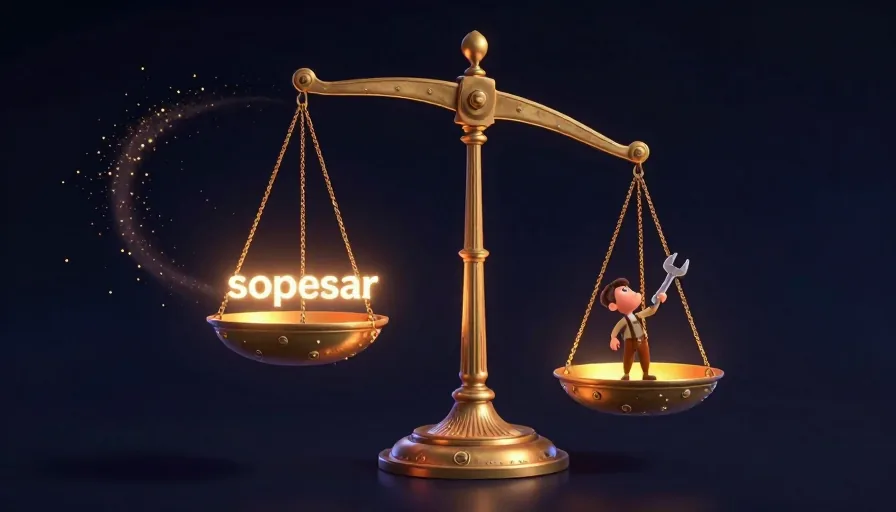
sopese: guía práctica y clara para dominar este tema en contexto real.
Mastering the Verb 'Sopesar': A Comprehensive Guide for Spanish Learners
The verb sopesar is a fundamental part of the Spanish language, often used to express the act of weighing or considering options carefully. Understanding how to use sopesar correctly can significantly enhance your Spanish communication skills. This guide will delve into the definition, grammatical classification, translations, and common mistakes associated with this verb.
What is 'Sopesar'? Definition and Core Meaning
Sopesar is a transitive verb, meaning it requires a direct object to complete its meaning. It is commonly translated to English as 'to weigh' or 'to consider,' but its usage can vary depending on the context. The core meaning of sopesar revolves around evaluating options or making decisions based on careful consideration.
Practical Example
Majo y su familia están sopesando las opciones para viajar en vacaciones.
In this sentence, sopesar is used to describe the process of evaluating different travel options for a vacation. The direct object here is 'las opciones,' which completes the meaning of the verb.
Translating 'Sopesar': Contextual Nuances in English
While sopesar can be directly translated to 'to weigh' or 'to consider,' the contextual nuances in English can vary. Here are some common translations and their contextual differences:
-
To weigh: This translation is often used when referring to physical weighing or evaluating the pros and cons of a situation.
- Example: Ella sopesó las opciones antes de tomar una decisión. (She weighed the options before making a decision.)
-
To consider: This translation is used when the focus is on thinking about something carefully.
- Example: Es importante sopesar todas las posibilidades. (It is important to consider all possibilities.)
-
To evaluate: This translation is used when the focus is on assessing the value or importance of something.
- Example: El comité sopesó las propuestas presentadas. (The committee evaluated the proposals presented.)
Grammar Deep Dive: Conjugation and Usage Examples
Sopesar follows regular conjugation patterns in Spanish. Here are some examples in different tenses:
Present Tense
- Yo sopeso
- Tú sopesas
- Él/Ella/Usted sopesa
- Nosotros/as sopesamos
- Vosotros/as sopesáis
- Ellos/as/Ustedes sopesan
Preterite Tense
- Yo sopesé
- Tú sopesaste
- Él/Ella/Usted sopesó
- Nosotros/as sopesamos
- Vosotros/as sopesasteis
- Ellos/as/Ustedes sopesaron
Imperfect Tense
- Yo sopesaba
- Tú sopesabas
- Él/Ella/Usted sopesaba
- Nosotros/as sopesábamos
- Vosotros/as sopesabais
- Ellos/as/Ustedes sopesaban
Mini Drill: Conjugate 'Sopesar' in the Present Tense
Complete the following sentences with the correct form of sopesar in the present tense:
- Ella
- Nosotros
- Vosotros
- Ellos
Interactive Example
Majo y su familia están sopesando las opciones para viajar en vacaciones.
In this sentence, sopesar is in the present continuous tense, indicating an ongoing process of evaluation. The direct object 'las opciones' is clearly defined, making the sentence grammatically correct.

Aprendé Idiomas con YouTube
Mirá videos en tu idioma objetivo, capturá palabras nuevas como flashcards automáticamente, y seguí tu progreso — todo en un solo lugar.
Ver Cómo Funciona →Common Mistakes: How to Use 'Sopesar' Correctly
Learners often make mistakes when using sopesar due to its contextual nuances. Here are some common errors and how to avoid them:
Mistake 1: Confusing 'Sopesar' with 'Ponderar'
Ponderar is often used interchangeably with sopesar, but it has a slightly different meaning. Ponderar means 'to ponder' or 'to reflect deeply,' while sopesar means 'to weigh' or 'to consider.'
- Incorrect: Ella ponderó las opciones antes de tomar una decisión. (She pondered the options before making a decision.)
- Correct: Ella sopesó las opciones antes de tomar una decisión. (She weighed the options before making a decision.)
Mistake 2: Omitting the Direct Object
Since sopesar is a transitive verb, it requires a direct object. Omitting the direct object can lead to grammatical errors.
- Incorrect: Ella sopesó. (She weighed.)
- Correct: Ella sopesó las opciones. (She weighed the options.)
Checklist for Correct Usage
- Ensure sopesar has a direct object.
- Choose the correct translation based on the context.
- Conjugate sopesar correctly in the appropriate tense.
- Avoid confusing sopesar with similar verbs like ponderar or considerar.
Comparison Chart: 'Sopesar' vs. Similar Verbs
| Verb | Meaning | Example Sentence | Contextual Nuance |
|---|---|---|---|
| Sopesar | To weigh, to consider | Ella sopesó las opciones antes de tomar una decisión. | Evaluating options or making decisions based on careful consideration. |
| Ponderar | To ponder, to reflect | Ella ponderó la situación antes de actuar. | Reflecting deeply on a situation or idea. |
| Considerar | To consider, to take into account | Ella consideró todas las posibilidades. | Taking into account various factors or possibilities. |
Idiomatic Usage of 'Sopesar'
Sopesar can also be used idiomatically in Spanish. One common idiomatic expression is sopesar las consecuencias, which means 'to weigh the consequences.' This expression is used when someone is carefully considering the potential outcomes of their actions.
- Example: Antes de tomar una decisión, es importante sopesar las consecuencias. (Before making a decision, it is important to weigh the consequences.)
Mini Drill: Idiomatic Usage
Complete the following sentence with the correct idiomatic expression:
*Antes de tomar una decisión, es importante
Conclusion
Mastering the verb sopesar is essential for Spanish learners aiming to enhance their communication skills. By understanding its definition, translations, and common mistakes, you can use sopesar correctly in various contexts. Practice with the examples and drills provided to solidify your understanding and improve your Spanish proficiency.
Preguntas frecuentes
What is the difference between 'sopesar' and 'ponderar'?
'Sopesar' means 'to weigh' or 'to consider,' while 'ponderar' means 'to ponder' or 'to reflect deeply.' 'Sopesar' is used for evaluating options or making decisions, whereas 'ponderar' is used for deep reflection on a situation or idea.
Can 'sopesar' be used without a direct object?
No, 'sopesar' is a transitive verb and requires a direct object to complete its meaning. Omitting the direct object can lead to grammatical errors.
How do I conjugate 'sopesar' in the present tense?
The present tense conjugation of 'sopesar' is as follows: Yo sopeso, Tú sopesas, Él/Ella/Usted sopesa, Nosotros/as sopesamos, Vosotros/as sopesáis, Ellos/as/Ustedes sopesan.
Frases relacionadas
Empezá con Metheus
Mirá videos en tu idioma objetivo, capturá palabras nuevas como flashcards automáticamente, y seguí tu progreso — todo en un solo lugar.
Comenzar →

