Understanding the translation and usage of the Spanish word jarrón inglés is essential for anyone learning English as a second language. This guide will provide a detailed explanation of what 'jarrón' means in English, how to use it in sentences, its cultural context, pronunciation, and comparisons with similar words.
What is 'jarrón' in English?
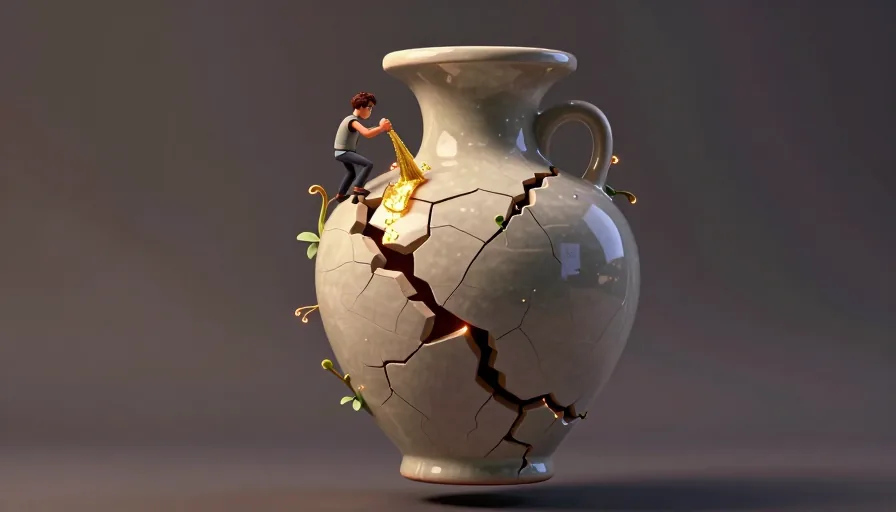
The Spanish word 'jarrón' translates to 'vase' in English. A vase is a container typically used to hold flowers or other decorative items. It comes in various shapes, sizes, and materials, such as glass, ceramic, or metal. Understanding this basic translation is the first step in mastering the word 'jarrón' in English.
Usage Examples in Sentences
To fully grasp the usage of 'jarrón inglés,' let's look at some practical examples in sentences:
-
Simple Sentence:
- Spanish: Mi madre tiene un jarrón en la mesa del comedor.
- English: My mother has a vase on the dining table.
-
Descriptive Sentence:
- Spanish: El jarrón azul está lleno de flores frescas.
- English: The blue vase is full of fresh flowers.
-
Complex Sentence:
- Spanish: Aunque el jarrón se rompió, mi abuela lo arregló con pegamento.
- English: Although the vase broke, my grandmother fixed it with glue.
-
Cultural Context:
- Spanish: En la fiesta de cumpleaños, el jarrón de cristal fue el centro de atención.
- English: At the birthday party, the crystal vase was the center of attention.
Cultural Context and Common Phrases
The word 'jarrón' has a rich cultural context in Spanish-speaking countries. Vases are often used in traditional ceremonies, weddings, and religious events. For example, in Mexico, vases are commonly used to hold flowers during Día de los Muertos (Day of the Dead) celebrations. Understanding these cultural nuances can enhance your language learning experience.
Common Phrases
-
Llenar el jarrón: To fill the vase.
- English: Fill the vase with water before putting the flowers in.
-
Romper el jarrón: To break the vase.
- English: Be careful not to break the vase while moving it.
-
Regalar un jarrón: To give a vase as a gift.
- English: She decided to give a beautiful vase as a housewarming gift.

Aprendé Idiomas con YouTube
Mirá videos en tu idioma objetivo, capturá palabras nuevas como flashcards automáticamente, y seguí tu progreso — todo en un solo lugar.
Ver Cómo Funciona →Pronunciation Guide
Pronunciation is crucial for effective communication. Here’s a step-by-step guide to pronouncing 'jarrón' correctly:
- Phonetic Breakdown: /xaˈron/
- Syllable Stress: The stress is on the second syllable (JAR-ron).
- Interactive Pronunciation Guide: Listen to the audio pronunciation here.
Mini Drill
Practice the pronunciation by repeating the following phrases aloud:
- El jarrón está en la mesa.
- El jarrón es muy bonito.
- El jarrón se rompió.
Comparison with Similar Words in English
To avoid common mistakes, it’s important to compare 'jarrón' with similar words in English:
-
Vase vs. Jar:
- A vase is typically used for flowers, while a jar is more versatile and can hold various items like pickles, jam, or even plants.
- Example: I put the flowers in a vase, but I stored the jam in a jar.
-
Vase vs. Pitcher:
- A pitcher is used for pouring liquids, while a vase is for holding flowers or decorative items.
- Example: The pitcher is on the table for pouring water, but the vase is on the shelf for display.
-
Vase vs. Bowl:
- A bowl is used for holding food or liquids, while a vase is for holding flowers or decorative items.
- Example: The bowl is on the table for serving soup, but the vase is on the shelf for display.
Checklist for Mastering 'Jarrón Inglés'
- Understand the basic translation: 'jarrón' = 'vase'
- Practice using 'jarrón' in various sentence structures.
- Learn common phrases involving 'jarrón'.
- Master the pronunciation of 'jarrón'.
- Compare 'jarrón' with similar words in English to avoid mistakes.
By following this checklist, you'll be well on your way to mastering the word 'jarrón' in English.
Conclusion
Learning the translation and usage of 'jarrón inglés' involves understanding its meaning, practicing its usage in sentences, grasping its cultural context, mastering its pronunciation, and comparing it with similar words. With this comprehensive guide, you'll be able to use 'jarrón' confidently in your English conversations.
Preguntas frecuentes
Is 'jarrón' always translated as 'vase'?
While 'jarrón' is most commonly translated as 'vase,' it's important to consider the context. In some cases, it might be translated as 'jar' or 'container,' especially if it's used for holding items other than flowers.
How do I pronounce 'jarrón' correctly?
To pronounce 'jarrón' correctly, follow the phonetic breakdown /xaˈron/ and stress the second syllable. Listen to the interactive pronunciation guide [here](INSERT_AUDIO_LINK) for better clarity.
What are some common mistakes to avoid when using 'jarrón' in English?
Common mistakes include confusing 'jarrón' with 'jar,' 'pitcher,' or 'bowl.' Remember that a vase is specifically used for holding flowers or decorative items, while the other terms have different uses.
Frases relacionadas
Empezá con Metheus
Mirá videos en tu idioma objetivo, capturá palabras nuevas como flashcards automáticamente, y seguí tu progreso — todo en un solo lugar.
Comenzar →

