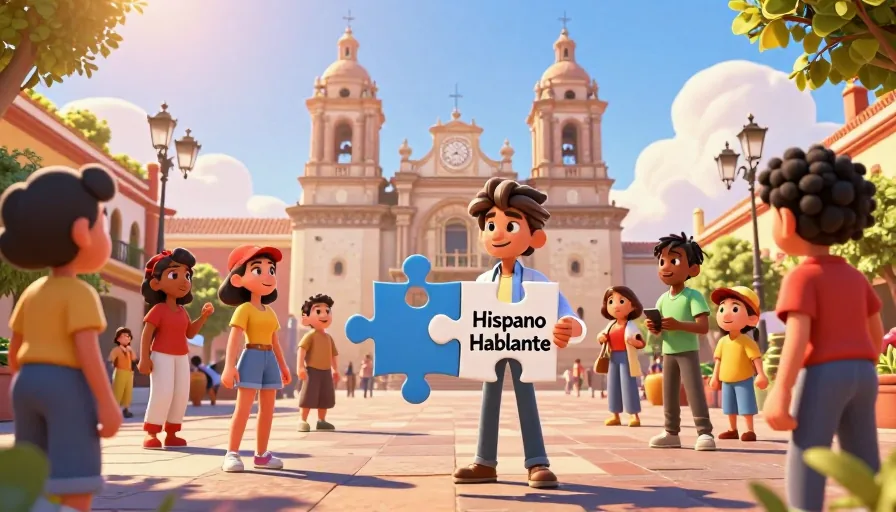
The term hispano hablante refers to a person who speaks the Spanish language. This term is widely used in various Spanish-speaking countries to describe individuals who have Spanish as their native language or who are proficient in it. Understanding the nuances of this term can provide valuable insights into the cultural and linguistic landscape of the Spanish-speaking world.
What Does 'Hispano Hablante' Mean?
The term 'hispano hablante' is derived from the words 'hispano,' which refers to something related to Spain or the Spanish language, and 'hablante,' which means 'speaker.' Therefore, a hispano hablante is someone who speaks Spanish. This term is often used interchangeably with 'hispanohablante,' but the latter is more commonly used in formal contexts.
Etymology and Usage
The etymology of 'hispano hablante' can be traced back to the Latin word 'Hispania,' which was the Roman name for the Iberian Peninsula. Over time, the term evolved to encompass not just the people of Spain but also those who speak the Spanish language, regardless of their geographical location.
Usage of 'Hispano Hablante' in Different Countries
The usage of 'hispano hablante' varies slightly across different Spanish-speaking countries. In some regions, it is more commonly used in academic or formal settings, while in others, it is part of everyday language.
Spain
In Spain, the term 'hispano hablante' is often used in educational contexts to describe students who are learning Spanish as a second language. It is also used in official documents and media to refer to Spanish speakers.
Latin America
In Latin America, the term is more commonly used in academic and literary contexts. For example, in Mexico, the term 'hispanohablante' is often used in literature and academic papers to describe Spanish-speaking authors or characters.
United States
In the United States, the term 'hispano hablante' is used to describe Spanish speakers, particularly in bilingual education programs and in discussions about language policy. It is also used in media and official documents to refer to the growing population of Spanish speakers in the country.
Cultural Significance and Common Phrases
The term 'hispano hablante' carries significant cultural weight. It is often used to celebrate the richness and diversity of the Spanish language and its speakers. Here are some common phrases and expressions related to 'hispano hablante' that you might encounter:
Common Phrases
- El número de hispanohablantes en el mundo está creciendo. - The number of Spanish speakers in the world is growing.
- Soy un hispanohablante nativo. - I am a native Spanish speaker.
- La comunidad hispanohablante en Estados Unidos es muy diversa. - The Spanish-speaking community in the United States is very diverse.
- Los hispanohablantes tienen una rica herencia cultural. - Spanish speakers have a rich cultural heritage.
- El español es una lengua hispanohablante. - Spanish is a language spoken by hispanohablantes.
Cultural Significance
The term 'hispano hablante' is not just about language; it is about identity and community. It is a way for Spanish speakers to connect with each other and celebrate their shared heritage. In many Spanish-speaking countries, being a hispano hablante is a source of pride and a way to preserve cultural traditions.
Examples in Sentences
Here are some practical examples of how 'hispano hablante' can be used in sentences:
- El profesor de español es un hispanohablante nativo. - The Spanish teacher is a native Spanish speaker.
- La conferencia está dirigida a hispanohablantes de todo el mundo. - The conference is aimed at Spanish speakers from all over the world.
- El libro está escrito en español para hispanohablantes principiantes. - The book is written in Spanish for beginner Spanish speakers.
- La comunidad hispanohablante en esta ciudad es muy activa. - The Spanish-speaking community in this city is very active.
- El festival celebra la cultura y la lengua hispanohablante. - The festival celebrates the culture and language of Spanish speakers.

Aprendé Idiomas con YouTube
Mirá videos en tu idioma objetivo, capturá palabras nuevas como flashcards automáticamente, y seguí tu progreso — todo en un solo lugar.
Ver Cómo Funciona →Comparison with Other Related Terms
It is essential to understand how 'hispano hablante' compares with other related terms to avoid confusion. Here are some comparisons:
Hispano vs. Latino
- Hispano refers specifically to people of Spanish origin or those who speak Spanish. It is often used in academic and formal contexts.
- Latino is a broader term that includes people from Latin America, regardless of their language. It is more commonly used in the United States.
Hispanohablante vs. Hispano Hablante
- Hispanohablante is the more formal and commonly used term in academic and literary contexts.
- Hispano hablante is used interchangeably but is less common in formal settings.
Checklist for Correct Usage
To ensure you are using 'hispano hablante' correctly, follow this checklist:
- Understand the Context: Know whether you are in a formal or informal setting.
- Choose the Right Term: Use 'hispanohablante' in formal contexts and 'hispano hablante' in informal ones.
- Practice Pronunciation: Make sure you pronounce it correctly. Listen to audio pronunciations if needed.
- Use in Sentences: Practice using the term in different sentences to get comfortable with it.
- Cultural Sensitivity: Be mindful of the cultural significance and use the term respectfully.
Mini Drills
- Fill in the Blanks: Complete the following sentences with the correct term:
- El número de
- en el mundo está creciendo.
- Soy un
- nativo.
- La comunidad
- en Estados Unidos es muy diversa.
- True or False: Determine if the following statements are true or false:
- Hispano and Latino are interchangeable terms.
- Hispanohablante is more commonly used in formal contexts.
- The term 'hispano hablante' is only used in Spain.
- Pronunciation Practice: Listen to audio pronunciations and repeat the term 'hispano hablante' several times to get the pronunciation right.
Interactive Quizzes and Exercises for Learners
To reinforce your understanding of 'hispano hablante,' try these interactive quizzes and exercises:
Quiz: True or False
- Hispano hablante is a term used exclusively in Spain.
- The term 'hispano hablante' refers to someone who speaks Spanish.
- Hispanohablante is more commonly used in informal contexts.
- The term 'hispano hablante' is derived from the Latin word 'Hispania.'
- The number of Spanish speakers in the world is decreasing.
Exercise: Sentence Completion
Complete the following sentences with the correct term:
- El número de
- en el mundo está creciendo.
- Soy un
- nativo.
- La comunidad
- en Estados Unidos es muy activa.
- El festival celebra la cultura y la lengua -.
- El libro está escrito en español para
- principiantes.
Exercise: Pronunciation Practice
Listen to the audio pronunciation of 'hispano hablante' and repeat it several times to get the pronunciation right. Practice with different sentences to improve your fluency.
Audio Pronunciations and Video Demonstrations
To enhance your learning experience, listen to audio pronunciations and watch video demonstrations of 'hispano hablante' in use. These resources can help you understand the correct pronunciation and usage in different contexts.
Audio Pronunciations
Listen to native speakers pronounce 'hispano hablante' and repeat after them. Pay attention to the stress and intonation to get the pronunciation right.
Video Demonstrations
Watch videos of native speakers using 'hispano hablante' in sentences. Observe how they use the term in different contexts and practice using it in your own sentences.
By following this comprehensive guide, you will gain a deep understanding of the term 'hispano hablante,' its usage, and its cultural significance. Whether you are a language learner or a native speaker, this guide will help you use the term correctly and confidently.
Preguntas frecuentes
Is 'hispano hablante' the same as 'hispanohablante'?
While 'hispano hablante' and 'hispanohablante' are often used interchangeably, 'hispanohablante' is more commonly used in formal contexts, such as academic and literary settings. 'Hispano hablante' is more commonly used in informal contexts and everyday language.
Can 'hispano hablante' be used to describe non-native Spanish speakers?
The term 'hispano hablante' is typically used to describe native Spanish speakers or those who are highly proficient in the language. However, it can also be used to describe non-native speakers who are learning Spanish, especially in educational contexts.
Is 'hispano hablante' only used in Spain?
No, 'hispano hablante' is used in various Spanish-speaking countries, including Spain, Latin America, and the United States. The usage may vary slightly depending on the region, but the term is widely understood and used across the Spanish-speaking world.
Frases relacionadas
Empezá con Metheus
Mirá videos en tu idioma objetivo, capturá palabras nuevas como flashcards automáticamente, y seguí tu progreso — todo en un solo lugar.
Comenzar →

