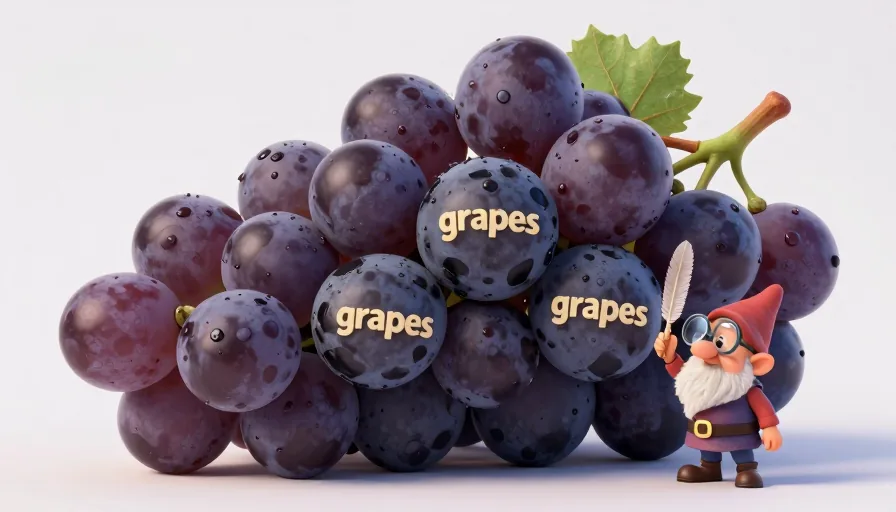
uvas en ingles: guía práctica y clara para dominar este tema en contexto real.
Uvas en inglés: A Comprehensive Guide to Translation and Usage
When learning Spanish, understanding how to translate uvas en inglés is essential. 'Uvas' is a feminine noun that translates directly to 'grapes' in English. This guide will provide you with the tools to use 'uvas' correctly in various contexts, along with pronunciation tips and common phrases.
What is 'Uva' in English?
The direct translation of 'uva' to English is 'grape.' However, understanding the context in which 'uva' is used can significantly enhance your language skills. For example, in Spanish, you might hear 'una uva' (a grape) or 'las uvas' (the grapes).
Pronunciation Guide
To pronounce 'uva' correctly, listen to the audio pronunciation here. The phonetic spelling is /ˈu.βa/, with the stress on the first syllable.
Contextual Uses of 'Uva' in English Sentences
Understanding how to use 'uva' in different contexts is crucial for effective communication. Here are some practical examples:
-
In a Recipe:
- Spanish: 'Necesito comprar uvas para hacer vino.'
- English: 'I need to buy grapes to make wine.'
-
In a Conversation:
- Spanish: 'Me encantan las uvas verdes.'
- English: 'I love green grapes.'
-
In a Cultural Context:
- Spanish: 'Comemos doce uvas cada Año Nuevo.'
- English: 'We eat twelve grapes every New Year.'
Idiomatic Usage
Idiomatic expressions can add depth to your language skills. For example, in Spanish, 'estar en la uva' means to be in a state of confusion or disarray. This phrase doesn't have a direct translation in English but can be understood as 'being in a pickle' or 'being in a mess.'

Aprendé Idiomas con YouTube
Mirá videos en tu idioma objetivo, capturá palabras nuevas como flashcards automáticamente, y seguí tu progreso — todo en un solo lugar.
Ver Cómo Funciona →Grammar Note: Understanding Spanish Nouns (Feminine Gender)
In Spanish, 'uva' is a feminine noun. This means it is often preceded by the feminine article 'la' or 'una' and is modified by feminine adjectives. For example:
- La uva es dulce. (The grape is sweet.)
- Una uva roja. (A red grape.)
Common Mistakes to Avoid
- Gender Agreement: Ensure that the adjectives and articles agree with the gender of 'uva.'
- Plural Form: The plural form of 'uva' is 'uvas,' not 'uvos.'
- Contextual Misuse: Avoid using 'uva' in contexts where 'grape' doesn't fit. For example, 'uva' should not be used to describe a type of wine unless it's specifically referring to the grapes used to make the wine.
Related Vocabulary and Common Phrases
Expanding your vocabulary around 'uva' can help you communicate more effectively. Here are some related words and phrases:
- Viticultura: The science and practice of grape cultivation.
- Vinificación: The process of making wine from grapes.
- Racimo de uvas: A bunch of grapes.
- Vino tinto: Red wine (made from red grapes).
- Vino blanco: White wine (made from green grapes).
Mini Drill: Practice with Sentences
-
Translate the following sentences from Spanish to English:
- Las uvas están maduras.
- Me gusta comer uvas frescas.
- Las uvas son buenas para la salud.
-
Create your own sentences using 'uva' in different contexts.
Checklist for Mastering 'Uvas en inglés'
- Understand the direct translation of 'uva' to English.
- Practice pronunciation using audio resources.
- Learn and use 'uva' in various contexts.
- Expand your vocabulary with related words and phrases.
- Avoid common mistakes in gender agreement and plural forms.
By following this guide, you'll be well on your way to mastering the translation and usage of 'uvas en inglés.'
Preguntas frecuentes
Why is it important to understand the gender of 'uva' in Spanish?
Understanding the gender of 'uva' is crucial because it affects the articles and adjectives that accompany it. 'Uva' is a feminine noun, so it requires feminine articles (la, una) and adjectives (e.g., una uva dulce).
How do I pronounce 'uva' correctly?
To pronounce 'uva' correctly, listen to the audio pronunciation [here](https://www.spanishdict.com/translate/uva). The phonetic spelling is /ˈu.βa/, with the stress on the first syllable.
What are some common mistakes to avoid when using 'uva' in Spanish?
Common mistakes include incorrect gender agreement, using the wrong plural form ('uvos' instead of 'uvas'), and misusing 'uva' in contexts where 'grape' doesn't fit.
Frases relacionadas
Empezá con Metheus
Mirá videos en tu idioma objetivo, capturá palabras nuevas como flashcards automáticamente, y seguí tu progreso — todo en un solo lugar.
Comenzar →

