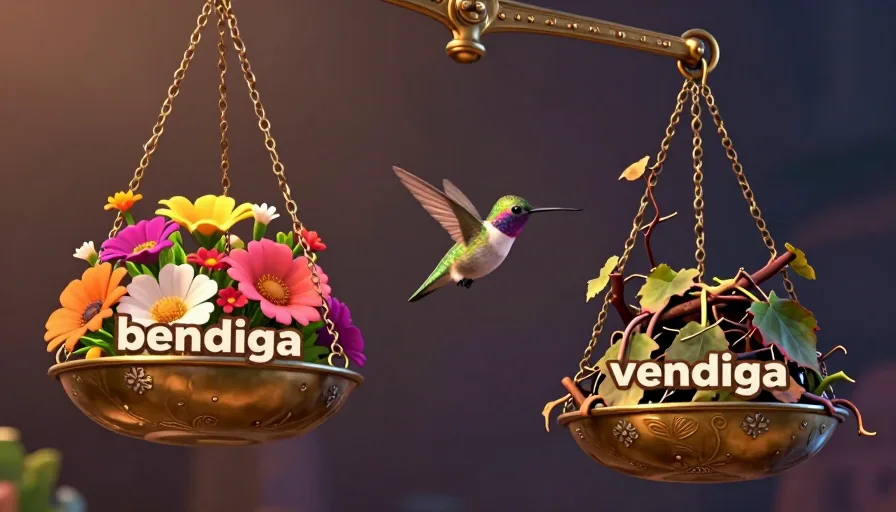
When learning Spanish, you might come across the phrases 'vendiga' and 'bendiga.' These terms are often used in religious or blessings contexts, but their meanings and usages can be confusing. This guide will help you understand the difference between 'vendiga' and 'bendiga,' how to use them correctly in sentences, and the cultural context behind these phrases.
What Does 'Vendiga' Mean?
The term 'vendiga' is a colloquial and less common variation of 'bendiga.' It is often used in informal contexts and is not widely recognized in formal Spanish. The phrase 'Que Dios te vendiga' is a blessing that translates to 'May God bless you.' However, it is more common to hear 'Que Dios te bendiga' in standard Spanish.
The Difference Between 'Vendiga' and 'Bendiga'
The primary difference between 'vendiga' and 'bendiga' lies in their usage and recognition. 'Bendiga' is the correct and widely accepted form, derived from the verb 'bendecir,' which means 'to bless.' 'Vendiga,' on the other hand, is a less common and often regional variation. Understanding this difference is crucial for effective communication in Spanish.
How to Use 'Vendiga' in Sentences
While 'vendiga' is not the standard form, it can still be encountered in certain regions. Here are some examples of how it might be used:
- Incorrect but colloquial: 'Que Dios te vendiga con salud y prosperidad.' (May God bless you with health and prosperity.)
- Correct and standard: 'Que Dios te bendiga con salud y prosperidad.' (May God bless you with health and prosperity.)
Cultural Context and Regional Variations
The use of 'vendiga' versus 'bendiga' can vary significantly by region. In some Latin American countries, 'vendiga' might be more commonly heard in informal or rural settings. However, in formal or written Spanish, 'bendiga' is always the correct choice. Understanding these regional differences can help you navigate conversations more effectively.
Interactive Quiz
Test your understanding with this mini quiz:
-
Which phrase is more commonly used in formal Spanish?
- a) Que Dios te vendiga
- b) Que Dios te bendiga
-
What does 'bendecir' mean in English?
- a) To curse
- b) To bless
-
In which context might you hear 'vendiga' more frequently?
- a) Formal settings
- b) Informal or rural settings
Audio Pronunciations
- Vendiga: Listen to the pronunciation
- Bendiga: Listen to the pronunciation

Aprendé Idiomas con YouTube
Mirá videos en tu idioma objetivo, capturá palabras nuevas como flashcards automáticamente, y seguí tu progreso — todo en un solo lugar.
Ver Cómo Funciona →Common Mistakes and How to Avoid Them
Checklist for Correct Usage
- Use 'bendiga' in formal and written contexts.
- Avoid 'vendiga' unless in a very specific regional context where it is commonly used.
- Practice with example sentences to reinforce correct usage.
Mini Drill
Practice the following sentences to improve your understanding:
-
Incorrect: 'Que Dios te vendiga con amor.'
- Correct: 'Que Dios te bendiga con amor.'
-
Incorrect: 'El sacerdote nos vendiga con su presencia.'
- Correct: 'El sacerdote nos bendiga con su presencia.'
-
Incorrect: 'Vendiga a todos los presentes.'
- Correct: 'Bendiga a todos los presentes.'
By following these guidelines and practicing with the examples provided, you can confidently use 'vendiga' and 'bendiga' in the correct contexts. Understanding the cultural and regional differences will also enhance your overall language proficiency.
Conclusion
Learning the nuances between 'vendiga' and 'bendiga' is essential for mastering Spanish. By focusing on correct usage, cultural context, and avoiding common mistakes, you can communicate more effectively and authentically in Spanish.
Preguntas frecuentes
Is 'vendiga' a standard Spanish term?
No, 'vendiga' is not a standard Spanish term. It is a colloquial and less common variation of 'bendiga,' which is the correct and widely accepted form.
Can I use 'vendiga' in formal writing?
It is not recommended to use 'vendiga' in formal writing. Stick to 'bendiga' for formal and written contexts to ensure clarity and correctness.
Are there regional differences in the use of 'vendiga' and 'bendiga'?
Yes, there are regional differences. 'Vendiga' might be more commonly heard in informal or rural settings in some Latin American countries, but 'bendiga' is universally accepted and used in formal contexts.
Frases relacionadas
Empezá con Metheus
Mirá videos en tu idioma objetivo, capturá palabras nuevas como flashcards automáticamente, y seguí tu progreso — todo en un solo lugar.
Comenzar →

