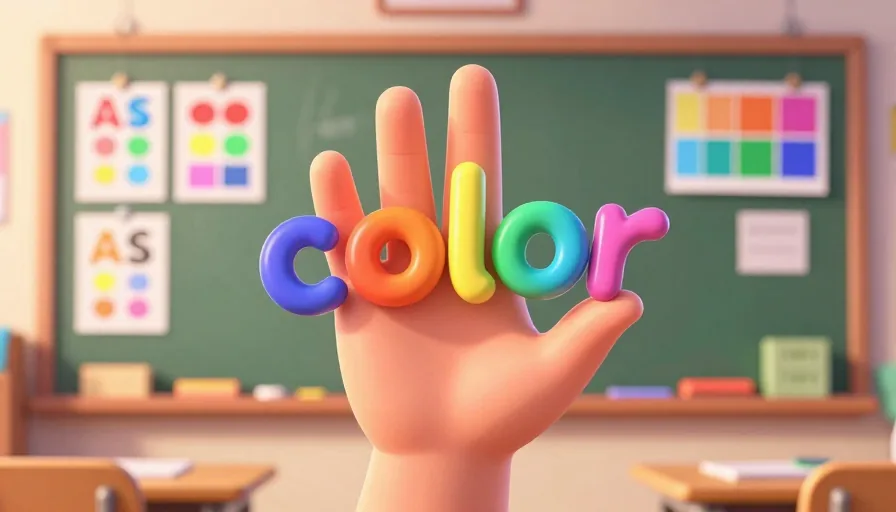
Master the ASL Sign for Color: A Comprehensive Guide
American Sign Language (ASL) is a rich and expressive language that relies on visual-spatial elements. One of the fundamental signs to learn is the ASL sign for color. This guide will provide you with clear, step-by-step instructions, visual representations, and practical examples to help you master this sign.
How to Sign 'Color' in American Sign Language (ASL)
To sign 'color' in ASL, follow these steps:
- Handshape: Start with your dominant hand in a flat, open position, with your fingers together and your thumb extended.
- Placement: Hold your hand up in front of your neck and chin area.
- Movement: Flutter your fingertips up and down while keeping your hand in the same position.
- Expression: Maintain eye contact and use a natural, fluid motion.
Visual Representation of the ASL Sign for Color
For a more detailed understanding, watch this video demonstration. The video provides a clear visual guide, showing the correct handshape, placement, and movement for the ASL sign for color. Pay close attention to the fluidity of the motion and the position of the hand.
Contextual Usage of the ASL Sign for Color
Understanding how to use the ASL sign for color in context is crucial. Here are a few examples:
- Simple Phrase: 'Your favorite color, what?'
- Sign: 'YOUR' (point to the person) + 'FAVORITE' (make a heart shape with your hands) + 'COLOR' (flutter fingertips) + 'WHAT?' (raise eyebrows and tilt head slightly)
- Describing an Object: 'The color of the car is red.'
- Sign: 'THE' (point to the object) + 'COLOR' (flutter fingertips) + 'CAR' (make a steering wheel shape with your hands) + 'RED' (sign for the color red)

Learn Languages with YouTube
Watch videos in your target language, auto-capture words into flashcards, and track your progress — all in one place.
See How It Works →Common Mistakes to Avoid
When learning the ASL sign for color, avoid these common mistakes:
- Incorrect Handshape: Ensure your fingers are together and your thumb is extended.
- Wrong Placement: The hand should be in front of your neck and chin area, not higher or lower.
- Rigid Movement: The fluttering motion should be fluid and natural, not stiff or jerky.
Checklist for Mastering the ASL Sign for Color
Use this checklist to ensure you've mastered the ASL sign for color:
- Correct handshape (flat, open hand with thumb extended)
- Proper placement (in front of neck and chin area)
- Fluid fluttering motion
- Natural expression and eye contact
- Practice in context (e.g., 'Your favorite color, what?')
Mini Drills to Improve Your ASL Skills
- Mirror Practice: Stand in front of a mirror and practice the ASL sign for color. Ensure your handshape, placement, and movement are correct.
- Contextual Practice: Use the sign in simple phrases and sentences. For example, 'The color of the sky is blue.'
- Speed Drills: Practice the sign at different speeds to improve fluidity and naturalness.
Additional Resources for Learning ASL
To further enhance your ASL skills, consider the following resources:
- Online Courses: Websites like Metheus.app offer comprehensive ASL courses for beginners and advanced learners.
- Practice Partners: Find a practice partner or join an ASL study group to improve your skills through conversation.
- Video Tutorials: Watch and learn from professional ASL instructors on platforms like YouTube.
Conclusion
Mastering the ASL sign for color is an essential step in your ASL learning journey. With practice and the right resources, you can improve your skills and communicate more effectively in ASL.
FAQ
Is the ASL sign for color the same for all colors?
No, the ASL sign for 'color' is a general sign used to ask about or describe color. Each specific color has its own unique sign. For example, the sign for 'red' is different from the sign for 'blue'.
Can I use the ASL sign for color in any context?
While the ASL sign for 'color' is versatile, it's important to use it in the right context. For example, you can use it to ask about someone's favorite color or to describe the color of an object. However, it's not appropriate to use it as a standalone sign in every situation.
Related phrases
Start with Metheus
Watch videos in your target language, auto-capture words into flashcards, and track your progress — all in one place.
Get Started →

