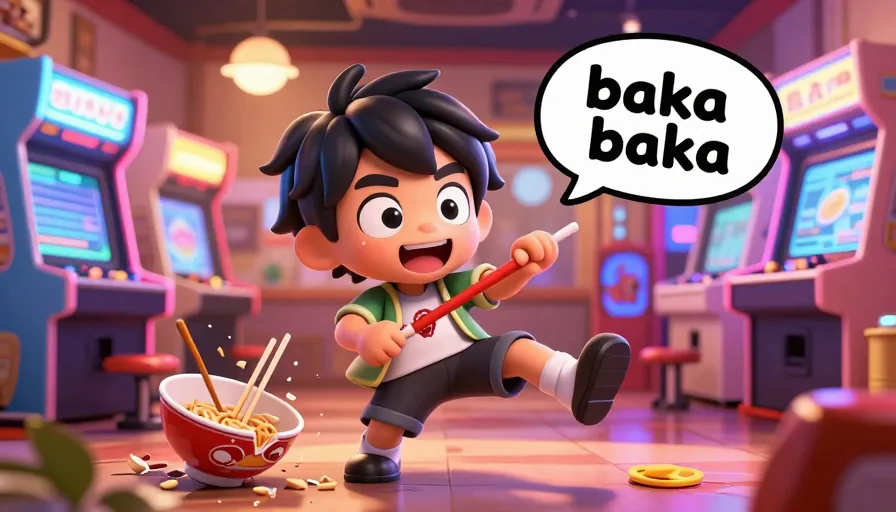
Understanding Japanese slang can be both fun and challenging, especially when it comes to terms like 'baka baka.' This phrase is a common expression in Japanese, but what does baka baka mean exactly? Let's dive into the nuances, cultural context, and appropriate usage of this term.
What is 'Baka' in Japanese? A Deep Dive into Meaning
The literal meaning of 'baka' (馬鹿) in Japanese is 'idiot,' 'stupid,' or 'fool.' It is a pejorative term used to describe someone who lacks intelligence or common sense. The word is written in kanji as 馬鹿, which can be broken down into two parts: 'ba' (馬) meaning 'horse' and 'ka' (化) meaning 'change' or 'transform.' The etymology suggests a transformation into something foolish or unintelligent, like a horse that can't think.
Understanding the Nuance: When to Use 'Baka' and When to Avoid It
Tone and Register
The nuance and register of 'baka' can vary greatly depending on the context. In casual settings, 'baka' can be used playfully among friends or family members to tease or jest. For example, if a friend does something silly, you might say 'baka!' in a lighthearted manner. However, in formal settings or with strangers, using 'baka' can be highly offensive and disrespectful.
Contextual Examples
-
Casual Conversation:
- Friend 1: 'I can't believe I forgot my keys again!'
- Friend 2: 'Baka! How many times has this happened?'
-
Anime/Manga:
- Character A: 'You're so stupid, you can't even solve this simple puzzle!'
- Character B: 'Baka! I'll show you who's stupid!'
-
Formal Setting:
- Boss: 'Your report is full of errors. This is unacceptable.'
- Employee: 'I'm sorry, I'll fix it right away.'
- Incorrect: Boss: 'You're a baka for making such mistakes.'
Comparison with Other Negative Terms
To understand 'baka' better, let's compare it with other similar negative terms in Japanese:
- Aho (アホ): This term is often used to describe someone who is foolish or silly. It is less offensive than 'baka' and can be used in more casual settings.
- Hoho (馬鹿): This term is more derogatory and is often used to describe someone who is extremely stupid or incompetent.
- Baka Yaro (馬鹿野郎): This is a more aggressive and insulting term, combining 'baka' with 'yarou' (野郎), which means 'guy' or 'fellow.'

Learn Languages with YouTube
Watch videos in your target language, auto-capture words into flashcards, and track your progress — all in one place.
See How It Works →Baka Baka: Context and Usage in Japanese Culture
The phrase 'baka baka' is a common expression in Japanese, often used to emphasize the stupidity of someone or something. It can be translated literally as 'idiot idiot' but is often used in a more playful or exaggerated manner. For example, in anime or manga, characters might say 'baka baka' repeatedly to express frustration or disbelief.
Cultural Context
In Japanese media, 'baka baka' is frequently used in comedic or exaggerated situations. It is often seen in anime, manga, and video games, where characters might use it to express their annoyance or disbelief at someone's actions. However, in real-life conversations, 'baka baka' is less common and can still be seen as offensive if used inappropriately.
Practical Examples
-
Anime/Manga:
- Character A: 'I can't believe you fell for that trick!'
- Character B: 'Baka baka! I should have known better!'
-
Casual Conversation:
- Friend 1: 'I can't believe I left my phone at home again.'
- Friend 2: 'Baka baka! You're always forgetting something.'
Mini Drill: Practice Using 'Baka' Appropriately
-
Imagine you are watching an anime with a friend. A character does something incredibly stupid. What would you say?
- Correct: 'Baka baka! That was so stupid!'
- Incorrect: 'Baka! You're so stupid!' (to your friend)
-
You are in a formal meeting at work. A colleague makes a mistake. What would you say?
- Correct: 'Let's correct this error and move forward.'
- Incorrect: 'Baka! You made a mistake.'
Common Mistakes to Avoid
- Using 'Baka' in Formal Settings: Always avoid using 'baka' in formal or professional settings. It can be highly offensive and disrespectful.
- Misinterpreting Tone: Be mindful of the tone and context. What might seem playful in one situation can be insulting in another.
- Overusing the Term: Repeatedly using 'baka' can diminish its impact and make you seem rude or insensitive.
Checklist: When to Use 'Baka'
- Casual Settings: Among friends or family in a playful context.
- Anime/Manga: In exaggerated or comedic situations.
- Never: In formal settings, with strangers, or in a serious context.
Conclusion
Understanding what does baka baka mean and how to use it appropriately can enhance your Japanese language skills and cultural awareness. By following the guidelines and examples provided, you can navigate the nuances of this term with confidence.
FAQ
Is it okay to use 'baka' with strangers?
No, using 'baka' with strangers is generally considered offensive and disrespectful. It's best to avoid using this term in formal or unfamiliar settings.
Can 'baka' be used in a positive context?
While 'baka' is inherently a negative term, it can be used playfully among close friends or family to tease or jest. However, it should never be used in a positive or complimentary manner.
What are some alternatives to 'baka'?
Some alternatives to 'baka' include 'aho' (foolish), 'hoho' (extremely stupid), and 'baka yarou' (stupid guy). Each of these terms has its own nuances and appropriate contexts for use.
Related phrases
Start with Metheus
Watch videos in your target language, auto-capture words into flashcards, and track your progress — all in one place.
Get Started →

