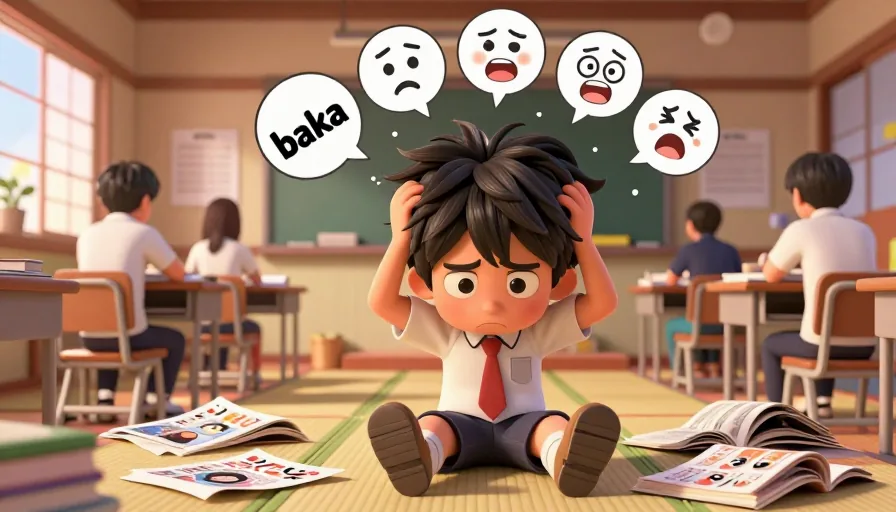
Understanding what does baka mean in English is crucial for anyone learning Japanese or engaging with Japanese media. 'Baka' is a versatile term that can range from a mild tease to a severe insult, depending on the context. This guide will explore the literal translation, cultural nuances, and practical usage of 'baka' in both Japanese and English contexts.
What is 'Baka'? The Literal Translation
The literal translation of 'baka' is 'idiot' or 'fool.' However, the term's usage in Japanese is more nuanced than its direct English counterparts. In Japanese, 'baka' can be used in various situations, from playful banter among friends to serious insults. The key to understanding 'baka' lies in recognizing the context and the relationship between the speakers.
Mini Drill: Literal Translation
Try translating the following sentences from Japanese to English, focusing on the literal meaning of 'baka':
- 君は馬鹿だね。
- 彼が馬鹿なことをした。
- 彼女は馬鹿じゃない。
The Spectrum of Meaning: From Teasing to Insult
The meaning of 'baka' can vary greatly depending on the tone, context, and relationship between the speakers. Here are some examples to illustrate this spectrum:
- Mild Teasing: Among friends, 'baka' can be used playfully to tease someone for a minor mistake or silly behavior. For example, if a friend trips over their own feet, you might say, "Baka!" with a laugh.
- Moderate Reprimand: In a more serious context, 'baka' can be used to reprimand someone for a significant but not grave mistake. For instance, a teacher might say, "Baka! You should have studied harder for the exam."
- Severe Insult: In the most extreme cases, 'baka' can be used as a severe insult to denigrate someone's intelligence or character. For example, "You are such a baka, you can't even do this simple task right."
Checklist: Understanding the Context
- Tone of Voice: Is the speaker using a playful, serious, or angry tone?
- Relationship: Are the speakers friends, acquaintances, or strangers?
- Situation: Is the context casual, formal, or confrontational?
Cultural Context: When and Where to Use 'Baka'
In Japanese culture, the use of 'baka' is deeply rooted in social hierarchies and interpersonal relationships. Understanding these nuances is essential for appropriate usage.
- Among Friends: 'Baka' is often used casually among friends and family members. It can be a way to show familiarity and closeness.
- In Public: Using 'baka' in public or formal settings is generally frowned upon. It can be seen as disrespectful and rude.
- With Strangers: Avoid using 'baka' with strangers or people you are not familiar with. It can be perceived as offensive and aggressive.
Mini Drill: Cultural Context
Imagine you are in the following situations. Would it be appropriate to use 'baka'? Why or why not?
- You are at a party with close friends.
- You are in a job interview.
- You are on a date with someone you just met.

Learn Languages with YouTube
Watch videos in your target language, auto-capture words into flashcards, and track your progress — all in one place.
See How It Works →Baka in Context: Examples from Anime and Real Life
Anime Context
In anime, 'baka' is often used in exaggerated and comedic ways. Characters might use it to express frustration, surprise, or even affection. For example, in the popular anime 'Naruto,' characters frequently call each other 'baka' in playful banter.
Real-Life Context
In real-life conversations, 'baka' can be used more subtly. For instance, a parent might gently scold their child with a soft "Baka, be careful!" after the child does something dangerous. The tone and context make it clear that the intention is not to insult but to caution.
Comparing 'Baka' to English Insults
To better understand 'baka,' let's compare it to similar English insults:
- Idiot: This is the closest direct translation, but 'idiot' in English is often more severe and less playful than 'baka.'
- Fool: 'Fool' can be used in a similar playful or serious context as 'baka,' but it is less common in everyday English.
- Dummy: 'Dummy' is often used in a more derogatory and less playful manner than 'baka.'
When and How to Use (or Avoid Using) 'Baka' in English/Japanese Contexts
Practical Examples
- Playful Teasing: "Hey, baka! You left your keys at home again?"
- Serious Reprimand: "You are such a baka for not studying for the exam."
- Avoiding Misuse: In formal settings, avoid using 'baka' altogether. Instead, use more polite phrases like "That was a mistake" or "You should have been more careful."
Checklist: Appropriate Usage
- Consider the Relationship: Use 'baka' only with people you are close to.
- Evaluate the Context: Ensure the situation is casual and informal.
- Observe the Tone: Make sure your tone matches the intended meaning (playful, serious, or severe).
Conclusion
Understanding what does baka mean in English involves more than just knowing the literal translation. It requires grasping the cultural nuances, context, and appropriate usage in different social settings. By following the guidelines and examples provided, you can use 'baka' effectively and respectfully in both Japanese and English contexts.
FAQ
Is it okay to use 'baka' with strangers?
No, using 'baka' with strangers is generally not appropriate. It can be perceived as offensive and disrespectful. Stick to more polite language in formal or unfamiliar settings.
Can 'baka' be used in professional settings?
No, 'baka' is not suitable for professional settings. It is considered rude and unprofessional. Use more formal and respectful language in the workplace.
How can I tell if someone is using 'baka' playfully or seriously?
Pay attention to the tone of voice, the context, and the relationship between the speakers. Playful use often involves a lighthearted tone and a casual setting, while serious use may involve a more stern tone and a more formal context.
Related phrases
Start with Metheus
Watch videos in your target language, auto-capture words into flashcards, and track your progress — all in one place.
Get Started →

