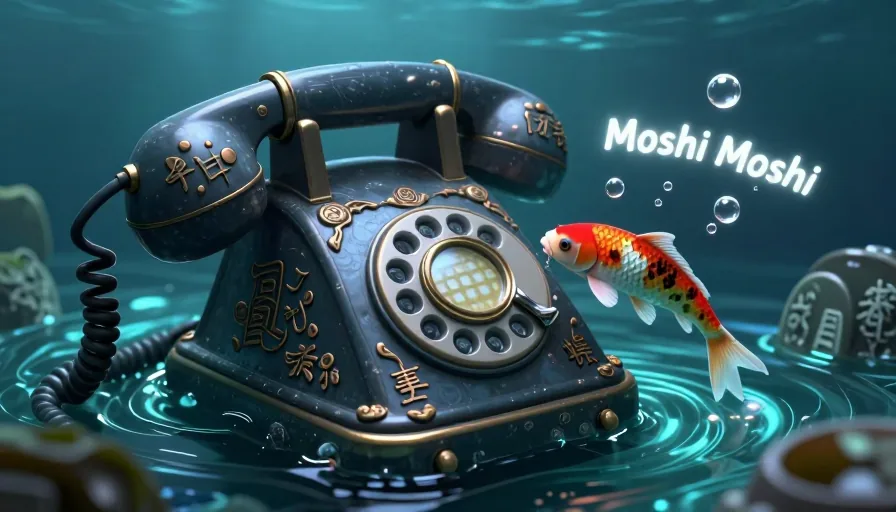
When learning Japanese, one of the first phrases you might encounter is what does moshi moshi mean. This phrase is more than just a simple greeting; it's a window into Japanese culture and communication styles. Understanding 'Moshi Moshi' goes beyond literal translation—it's about grasping the cultural context and nuances that make this phrase so unique.
What is the Literal Meaning of 'Moshi Moshi'?
The literal translation of 'Moshi Moshi' is not as straightforward as it might seem. The phrase is derived from the verb 'Mosu,' which means 'to say' or 'to speak.' When repeated as 'Moshi Moshi,' it essentially means 'speaking, speaking' or 'hello, hello.' However, this literal translation doesn't capture the full essence of the phrase.
Context is King: When and How to Use 'Moshi Moshi'
Greeting and Farewell
'Moshi Moshi' is primarily used as a greeting when answering the phone. It's a casual and friendly way to start a conversation. For example:
- Caller: Kon'nichi wa (Hello)
- Receiver: Moshi Moshi
Expression of Surprise or Acknowledgment
In some contexts, 'Moshi Moshi' can also express surprise or acknowledgment. For instance, if someone says something unexpected, you might respond with 'Moshi Moshi' to show that you're listening and acknowledging their words.
Checklist for Using 'Moshi Moshi'
- Use 'Moshi Moshi' when answering the phone in informal settings.
- Avoid using it in formal or written communication.
- Pay attention to the tone and context to ensure appropriate usage.
Cultural Nuances: Understanding the Tone Behind the Greeting
The tone and intent behind 'Moshi Moshi' are crucial for understanding its cultural significance. In Japanese culture, greetings are often more formal and respectful. 'Moshi Moshi' stands out because it's more casual and friendly, reflecting the close relationship between the speakers.
Mini Drill: Practice the Tone
Try saying 'Moshi Moshi' in different tones to understand how the meaning can change. Practice with a friend or language partner to get feedback on your pronunciation and tone.
Common Misconceptions About 'Moshi Moshi'
Misconception 1: 'Moshi Moshi' is a Formal Greeting
One common misconception is that 'Moshi Moshi' is a formal greeting. In reality, it's quite informal and should be used in casual settings. Using it in formal contexts can come across as disrespectful or inappropriate.
Misconception 2: 'Moshi Moshi' Means 'Hello'
While 'Moshi Moshi' can be used as a greeting, it's not a direct translation of 'hello.' It's more about acknowledging the start of a conversation, especially over the phone.
Misconception 3: 'Moshi Moshi' is Used in Writing
'Moshi Moshi' is primarily a spoken phrase and is rarely used in writing. It's important to understand the context in which this phrase is appropriate.

Learn Languages with YouTube
Watch videos in your target language, auto-capture words into flashcards, and track your progress — all in one place.
See How It Works →Comparison with Similar Japanese Greetings
Kon'nichi wa vs. Moshi Moshi
- Kon'nichi wa is a formal greeting used in various settings, both spoken and written.
- Moshi Moshi is informal and primarily used when answering the phone.
Ohayou gozaimasu vs. Moshi Moshi
- Ohayou gozaimasu is a morning greeting that is more formal and respectful.
- Moshi Moshi is casual and used in informal settings, often over the phone.
Practical Examples of 'Moshi Moshi' in Different Scenarios
Scenario 1: Answering a Phone Call from a Friend
- Friend: Moshi Moshi!
- You: Moshi Moshi! Genki? (How are you?)
Scenario 2: Answering a Phone Call from a Stranger
- Stranger: Moshi Moshi, [Your Name] desu ka? (Is this [Your Name]?)
- You: Hai, [Your Name] desu. (Yes, this is [Your Name].)
Scenario 3: Expressing Surprise
- Friend: [Unexpected news]
- You: Moshi Moshi! (Really?)
Conclusion
Understanding what does moshi moshi mean involves more than just knowing the literal translation. It's about grasping the cultural context, tone, and appropriate usage scenarios. By practicing with real-life examples and paying attention to the nuances, you can master this phrase and enhance your Japanese language skills.
Checklist for Mastering 'Moshi Moshi'
- Practice saying 'Moshi Moshi' in different tones and contexts.
- Use it in informal settings, especially when answering the phone.
- Avoid using it in formal or written communication.
- Pay attention to the cultural nuances and intent behind the phrase.
By following this checklist and practicing regularly, you'll be well on your way to mastering 'Moshi Moshi' and understanding its cultural significance.
FAQ
Can 'Moshi Moshi' be used in formal settings?
No, 'Moshi Moshi' is an informal greeting and should not be used in formal settings. It is primarily used when answering the phone in casual contexts.
Is 'Moshi Moshi' used in written communication?
'Moshi Moshi' is a spoken phrase and is rarely used in writing. It is more appropriate for verbal communication, especially over the phone.
What is the difference between 'Moshi Moshi' and 'Kon'nichi wa'?
'Moshi Moshi' is informal and used primarily when answering the phone, while 'Kon'nichi wa' is a formal greeting used in various settings, both spoken and written.
Related phrases
Start with Metheus
Watch videos in your target language, auto-capture words into flashcards, and track your progress — all in one place.
Get Started →

