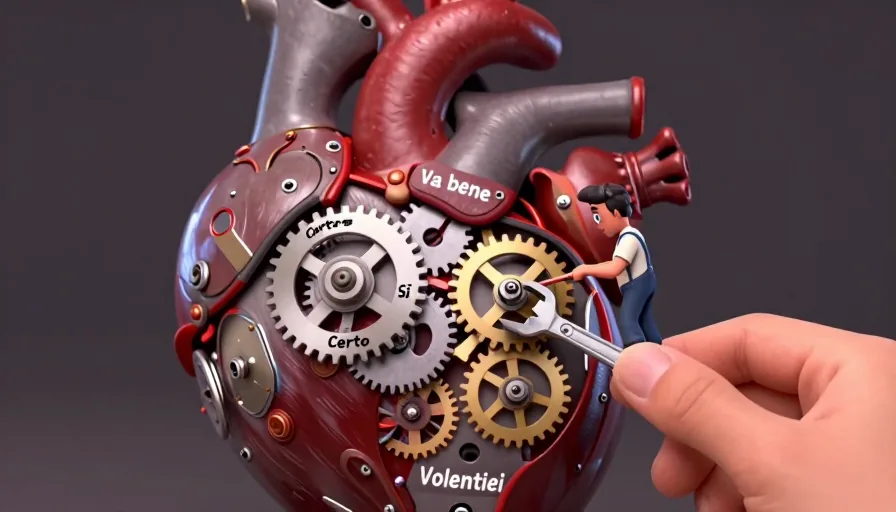
When learning Italian, understanding what is yes in Italian language is fundamental. While 'Sì' is the basic form, Italian offers a rich variety of expressions for agreement and affirmation. This guide will help you go beyond 'Sì' and master the nuances of Italian affirmations, enhancing your conversational fluency.
The Essential: 'Sì' – The Foundation of Affirmation
The most basic way to say yes in Italian is 'Sì'. Pronounced like 'see', it's straightforward and universally understood. However, relying solely on 'Sì' can make your speech sound monotonous and unnatural. Here's a quick pronunciation guide:
- Pronunciation: /si/
- Usage: Universal affirmation
- Example:
- Italian: Vuoi andare al cinema?
- English: Do you want to go to the cinema?
- Response: Sì, mi piacerebbe.
- English: Yes, I would like that.
Beyond 'Sì': Nuances for Different Situations (When to use 'Va Bene', 'Certo', etc.)
Va Bene
'Va bene' translates to 'okay' or 'alright' and is used in both formal and informal contexts. It's a versatile phrase that can express agreement, acceptance, or understanding.
- Pronunciation: /va 'be-ne/
- Usage: Agreement, acceptance, or understanding
- Example:
- Italian: Possiamo vederci alle 5?
- English: Can we meet at 5?
- Response: Va bene.
- English: Okay.
Certo
'Certo' means 'certainly' or 'of course' and is often used in formal or polite contexts. It conveys a strong sense of agreement or affirmation.
- Pronunciation: /'tʃer-to/
- Usage: Formal agreement or affirmation
- Example:
- Italian: Puoi aiutarmi con questo, per favore?
- English: Can you help me with this, please?
- Response: Certo, sarò felice di aiutarti.
- English: Certainly, I'll be happy to help you.
Volentieri
'Volentieri' translates to 'gladly' or 'with pleasure' and is used when you're happy to agree to something. It's a great way to express enthusiasm and willingness.
- Pronunciation: /vo-len-'tʃe-ri/
- Usage: Enthusiastic agreement
- Example:
- Italian: Vuoi venire a cena con noi?
- English: Do you want to come to dinner with us?
- Response: Volentieri!
- English: With pleasure!
D'accordo
'D'accordo' means 'agreed' or 'in agreement' and is used to express concurrence or consensus. It's often used in discussions or negotiations.
- Pronunciation: /dak-'kor-do/
- Usage: Agreement or consensus
- Example:
- Italian: Allora, ci vediamo domani alle 10?
- English: So, we'll meet tomorrow at 10?
- Response: D'accordo.
- English: Agreed.
Expressing Willingness: When to Use 'Volentieri'
'Volentieri' is a powerful phrase that conveys enthusiasm and willingness. Use it when you're genuinely happy to agree to something. Here's a mini-drill to practice:
- Drill: Respond to the following with 'Volentieri' and a brief explanation of why you're happy to agree.
- Vuoi venire a una festa con me?
- Puoi aiutare con i compiti?
- Vuoi vedere un film con me?
Agreeing and Concurring: Mastering 'D'accordo'
'D'accordo' is essential for expressing agreement in discussions. Use it to show consensus or to confirm a plan. Here's a checklist to help you master it:
- Checklist:
- Use 'D'accordo' when confirming a plan or decision.
- Use it in discussions to show consensus.
- Practice with a partner, taking turns to agree on different scenarios.

Learn Languages with YouTube
Watch videos in your target language, auto-capture words into flashcards, and track your progress — all in one place.
See How It Works →Real-Life Scenarios: Putting Your 'Yeses' into Practice
To truly master these phrases, practice them in real-life scenarios. Here are some dialogue examples:
At a Restaurant
- Waiter: Vuole ordinare il dessert?
- You: Certo, prendo il tiramisù.
- English: Certainly, I'll have the tiramisù.
With Friends
- Friend: Vuoi venire al concerto con noi?
- You: Volentieri! Non vedo l'ora.
- English: With pleasure! I can't wait.
In a Meeting
- Colleague: Allora, ci vediamo domani alle 10?
- You: D'accordo.
- English: Agreed.
On the Phone
- Caller: Puoi parlare ora?
- You: Va bene.
- English: Okay.
By practicing these phrases in context, you'll become more comfortable and fluent in using them. Remember, the key to mastering Italian affirmations is to focus on conversational fluency over rote memorization.
Comparison Chart: Social Context for Each 'Yes'
| Phrase | Formality | Context | Example |
|---|---|---|---|
| Sì | Neutral | Universal affirmation | Vuoi andare al cinema? Sì, mi piacerebbe. |
| Va bene | Neutral | Agreement, acceptance | Possiamo vederci alle 5? Va bene. |
| Certo | Formal | Strong agreement | Puoi aiutarmi con questo? Certo, sarò felice di aiutarti. |
| Volentieri | Informal | Enthusiastic agreement | Vuoi venire a cena con noi? Volentieri! |
| D'accordo | Neutral | Consensus | Ci vediamo domani alle 10? D'accordo. |
This chart should help you understand when to use each phrase based on the social context.
Pronunciation Tips for These Variations
Pronunciation is key to sounding natural in Italian. Here are some tips to help you master the pronunciation of these phrases:
- Sì: Pronounce it like the English 'see', with a short 'i' sound.
- Va bene: Stress the second syllable ('be-ne').
- Certo: The 'c' is pronounced like 'ch' in 'chat'.
- Volentieri: The stress is on the third syllable ('tʃe-').
- D'accordo: The stress is on the third syllable ('kor-do').
Practice these pronunciations regularly to build your confidence and fluency.
How These Phrases Sound in Real Conversation
To truly understand how these phrases sound in real conversation, listen to native speakers. Pay attention to the intonation, stress, and context. Here are some tips to help you:
- Listen to Italian podcasts or watch Italian movies and TV shows.
- Practice with a language exchange partner.
- Record yourself speaking and compare it to native speakers.
By immersing yourself in the language, you'll develop a natural sense of how these phrases are used in real-life conversations.
Common Mistakes to Avoid
- Overusing 'Sì': Relying solely on 'Sì' can make your speech sound unnatural.
- Mispronunciation: Incorrect pronunciation can lead to misunderstandings.
- Using the wrong phrase: Choosing the wrong phrase for the context can sound awkward or inappropriate.
Conclusion
Mastering the nuances of Italian affirmations will greatly enhance your conversational fluency. By understanding when and how to use 'Sì', 'Va bene', 'Certo', 'Volentieri', and 'D'accordo', you'll sound more natural and confident in your Italian conversations. Keep practicing, and soon you'll be expressing yourself like a native speaker.
Checklist for Mastering Italian Affirmations
- Practice pronunciation regularly.
- Use a variety of phrases in different contexts.
- Listen to native speakers to understand real-life usage.
- Record yourself speaking and compare it to native speakers.
- Practice with a language exchange partner to get feedback and improve.
By following this checklist, you'll be well on your way to mastering Italian affirmations.
Mini Drill: Practice Your 'Yeses'
- Scenario 1: Your friend invites you to a party. Respond with 'Volentieri' and explain why you're happy to go.
- Scenario 2: Your colleague asks if you can help with a project. Respond with 'Certo' and offer your assistance.
- Scenario 3: Your teacher asks if you understand the lesson. Respond with 'Sì' and ask a follow-up question to show your understanding.
- Scenario 4: Your partner suggests a plan for the weekend. Respond with 'D'accordo' and confirm the details.
- Scenario 5: Your friend asks if you want to grab coffee. Respond with 'Va bene' and suggest a time.
Practice these scenarios with a partner or record yourself to improve your fluency and confidence.
Final Thoughts
Learning what is yes in Italian language is more than just memorizing phrases. It's about understanding the nuances and context of each expression. By focusing on conversational fluency and practicing regularly, you'll be able to express yourself naturally and confidently in Italian.
FAQ
Why is it important to learn different ways to say 'yes' in Italian?
Learning different ways to say 'yes' in Italian helps you sound more natural and fluent in conversations. It allows you to express agreement, affirmation, and willingness in various contexts, making your speech more nuanced and authentic.
Can I use 'Sì' in all situations?
While 'Sì' is the basic form of affirmation, relying solely on it can make your speech sound monotonous. It's important to use a variety of phrases to express agreement and affirmation in different contexts, such as 'Va bene', 'Certo', 'Volentieri', and 'D'accordo'.
How can I improve my pronunciation of these phrases?
To improve your pronunciation, practice regularly and listen to native speakers. Pay attention to the stress and intonation of each phrase. You can also record yourself speaking and compare it to native speakers to identify areas for improvement.
What are some common mistakes to avoid when using these phrases?
Common mistakes include overusing 'Sì', mispronunciation, and using the wrong phrase for the context. To avoid these mistakes, practice regularly, listen to native speakers, and use a variety of phrases in different contexts.
Related phrases
Start with Metheus
Watch videos in your target language, auto-capture words into flashcards, and track your progress — all in one place.
Get Started →

