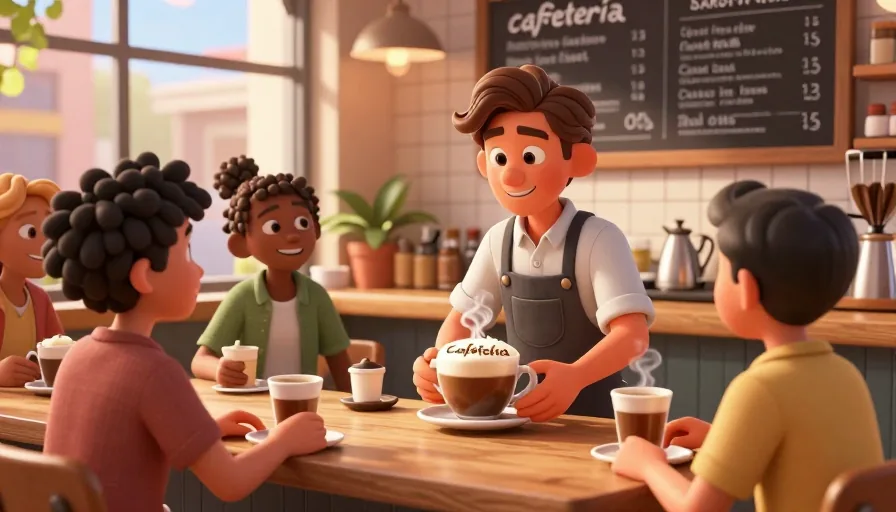
When traveling or living in an English-speaking country, understanding the translation and usage of 'cafetería en ingles' is essential. This guide will help you navigate different contexts, from ordering food to asking for directions, with confidence.
Direct Translation and Common Usage of 'Cafetería' in English Contexts
The direct translation of 'cafetería' in English is 'cafeteria.' This term is commonly used to refer to a place where meals are served, often in a self-service style. For example, you might find a cafeteria in a school, hospital, or office building. It's important to note that the term 'cafeteria' is gender-neutral in English, unlike the feminine noun in Spanish.
Grammatical Notes
In English, 'cafeteria' does not change form based on gender or number. You can use it in both singular and plural contexts without any changes. For example:
- Singular: I went to the cafeteria for lunch.
- Plural: There are several cafeterias in the city.
Cafetería vs. Cafe: Understanding the English Nuances
While 'cafeteria' and 'cafe' might seem interchangeable, they have distinct differences in English. A 'cafe' is typically a smaller establishment that serves coffee, pastries, and light meals. It often has a more relaxed and informal atmosphere. On the other hand, a 'cafeteria' is usually larger and serves full meals, often in a more structured setting like a school or workplace.
Practical Examples
- Cafe: Let's meet at the cafe downtown for a quick coffee.
- Cafeteria: I'll have lunch at the cafeteria in the office building.

Aprendé Idiomas con YouTube
Mirá videos en tu idioma objetivo, capturá palabras nuevas como flashcards automáticamente, y seguí tu progreso — todo en un solo lugar.
Ver Cómo Funciona →Essential Phrases for Ordering Food at an English Cafeteria
Knowing how to order food in an English cafeteria can make your dining experience much smoother. Here are some essential phrases to help you:
- Asking for a Menu: Could you please show me the menu?
- Ordering Food: I would like to order a salad and a sandwich, please.
- Asking for Recommendations: What do you recommend for lunch?
- Paying the Bill: How much do I owe you?
- Checking for Allergens: Does this dish contain any nuts?
Mini Drill
Practice these phrases with a friend or language partner to build confidence:
- Ask for the menu and order a dish.
- Ask for recommendations and inquire about allergens.
- Pay the bill and thank the server.
Navigating English Conversations in a Cafeteria Setting
Beyond ordering food, you might need to ask for directions or engage in small talk. Here are some useful phrases:
- Asking for Directions: Where is the nearest cafeteria?
- Small Talk: How is the food here?
- Making a Complaint: I think there's a mistake in my order.
- Expressing Gratitude: Thank you for your help.
Checklist for Cafeteria Conversations
- Before Entering: Know the basic phrases for ordering and asking for directions.
- While Ordering: Be clear about your choices and any dietary restrictions.
- After Ordering: Thank the server and enjoy your meal.
- Leaving: Pay the bill and thank the staff.
Cultural Context: Cafeterias in English-Speaking Countries
Understanding the cultural context can enhance your experience. In many English-speaking countries, cafeterias are common in schools, hospitals, and workplaces. They often serve a variety of foods to cater to different dietary needs and preferences. Knowing this can help you navigate the environment more comfortably.
Common Mistakes to Avoid
- Confusing 'Cafe' and 'Cafeteria': Remember that a cafe is usually smaller and more informal.
- Ignoring Cultural Norms: Be aware of local customs, such as tipping in some countries.
- Not Asking for Help: Don't hesitate to ask for assistance if you're unsure about something.
Conclusion
Mastering the translation and usage of 'cafetería en ingles' involves understanding the nuances between 'cafeteria' and 'cafe,' learning essential phrases, and being aware of cultural contexts. With practice and confidence, you'll be able to navigate any cafeteria setting with ease.
Preguntas frecuentes
What is the difference between a 'cafeteria' and a 'cafe' in English?
A 'cafeteria' is typically a larger establishment that serves full meals, often in a structured setting like a school or workplace. A 'cafe,' on the other hand, is usually smaller and more informal, serving coffee, pastries, and light meals.
How do I order food in an English cafeteria?
To order food in an English cafeteria, you can use phrases like 'Could you please show me the menu?' and 'I would like to order a salad and a sandwich, please.' Be clear about your choices and any dietary restrictions.
Do I need to use different articles or gender forms for 'cafeteria' in English?
No, 'cafeteria' is gender-neutral in English and does not change form based on gender or number. You can use it in both singular and plural contexts without any changes.
Frases relacionadas
Empezá con Metheus
Mirá videos en tu idioma objetivo, capturá palabras nuevas como flashcards automáticamente, y seguí tu progreso — todo en un solo lugar.
Comenzar →

