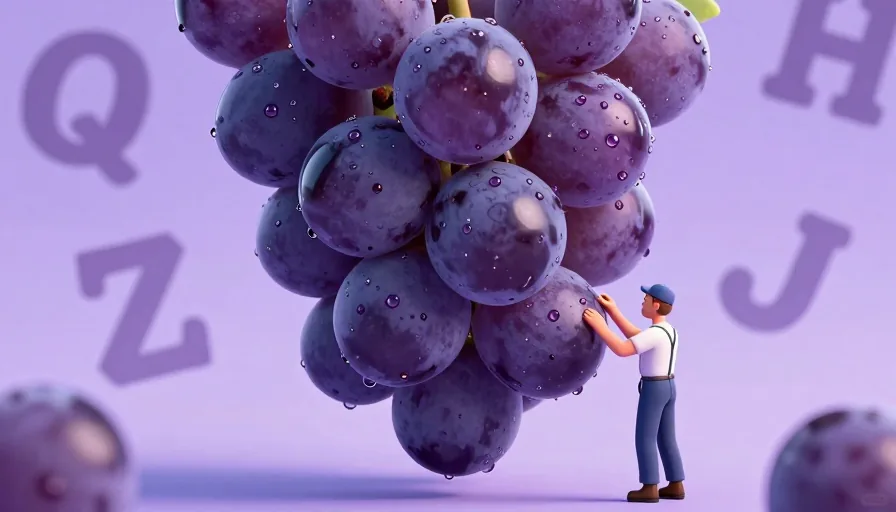
When learning a new language, understanding how to translate common words like 'uva' is essential. In this guide, we will explore how to say 'uva' in English, provide contextual usage examples, pronunciation tips, and related vocabulary to help you build a strong foundation in English.
How to Say 'Uva' in English: The Direct Translation
The direct translation of 'uva' in English is 'grape.' This is the most common and straightforward way to refer to the fruit. However, it's important to note that 'grape' can also refer to the plant that produces the fruit, as well as the color.
Using 'Uva' in Context: Common English Phrases
Understanding how to use 'uva' (grape) in various contexts is crucial for effective communication. Here are some common phrases and sentences that include 'grape' to help you practice:
Food and Drink
- A bunch of grapes: A group of grapes still attached to the stem.
- Example: I bought a bunch of grapes from the market.
- Grapes for snacking: Fresh grapes that are eaten as a snack.
- Example: I love eating grapes for snacking.
- Grapes for wine: Grapes used to make wine.
- Example: The grapes for wine are harvested in the fall.
- Grapes juice: Juice made from grapes.
- Example: I prefer grape juice over apple juice.
Wine and Vineyards
- Grape vineyard: A place where grapes are grown for wine production.
- Example: We visited a beautiful grape vineyard during our trip to Napa Valley.
- Grape harvest: The process of picking grapes from the vine.
- Example: The grape harvest this year was particularly bountiful.
- Grape wine: Wine made from grapes.
- Example: I enjoy a good glass of grape wine after a long day.
Colors and Metaphors
- Grapes of wrath: A metaphorical phrase referring to a situation of great anger or frustration.
- Example: The protesters were filled with the grapes of wrath over the new policy.
- Purple grape: A grape that is purple in color.
- Example: I prefer purple grapes over green ones.
Pronunciation Tips for English Learners
Pronunciation is key to effective communication. Here are some tips to help you pronounce 'grape' correctly:
- Phonetic spelling: /ɡreɪp/
- Break it down: Say it as 'gray-p' with the emphasis on the first syllable.
- Practice with audio: Use language learning apps or online resources to listen to native speakers pronounce 'grape.'
Mini Drill: Pronunciation Practice
- Listen to the audio pronunciation of 'grape.'
- Repeat the word aloud, focusing on the correct stress and intonation.
- Record yourself saying the word and compare it to the native speaker's pronunciation.
- Practice with different sentences to get comfortable with the word in various contexts.

Aprendé Idiomas con YouTube
Mirá videos en tu idioma objetivo, capturá palabras nuevas como flashcards automáticamente, y seguí tu progreso — todo en un solo lugar.
Ver Cómo Funciona →Related Vocabulary: Other Fruit/Grape-Related Terms in English
Expanding your vocabulary with related terms will help you communicate more effectively. Here are some related words and phrases:
- Grapefruit: A large, round citrus fruit with a bitter taste.
- Example: I had grapefruit for breakfast this morning.
- Raisin: A dried grape.
- Example: I love adding raisins to my oatmeal.
- Vine: The plant that grapes grow on.
- Example: The vineyard is filled with lush vines.
- Vintage: The year or season when grapes were harvested for wine.
- Example: This vintage wine is from 2010.
- Grapevine: A plant that produces grapes, or a network of people who spread information.
- Example: The grapevine is buzzing with rumors about the new project.
Checklist: Building Your Vocabulary
- Learn the direct translation of 'uva' (grape).
- Practice using 'grape' in different contexts (food, wine, colors).
- Master the pronunciation of 'grape' with audio aids.
- Expand your vocabulary with related terms (grapefruit, raisin, vine, vintage, grapevine).
- Create sentences using 'grape' and related terms to reinforce your learning.
Comparison of Different Ways to Refer to Grapes/Uva in English
In English, there are different ways to refer to grapes depending on the context. Here are some comparisons:
- Grape vs. Grapes: Use 'grape' when referring to a single fruit and 'grapes' when referring to multiple fruits.
- Example: I ate a grape for a snack. vs. I ate grapes for a snack.
- Grape vs. Grapevine: 'Grape' refers to the fruit, while 'grapevine' refers to the plant or a network of people spreading information.
- Example: The grape is sweet and juicy. vs. The grapevine is spreading rumors about the new manager.
- Grape vs. Grapefruit: 'Grape' refers to the small, round fruit, while 'grapefruit' refers to a larger, citrus fruit.
- Example: I love eating grapes. vs. I had grapefruit for breakfast.
Practical Examples and Conversational Usage
To truly master the use of 'grape' in English, it's essential to practice with practical examples and conversational usage. Here are some scenarios to help you:
At the Market
- Buying grapes: Ask the vendor for a bunch of grapes.
- Example: Can I have a bunch of grapes, please?
- Asking for recommendations: Ask for recommendations on the best grapes to buy.
- Example: Which grapes do you recommend for snacking?
At a Restaurant
- Ordering a dish with grapes: Order a dish that includes grapes.
- Example: I'd like to order the salad with grapes, please.
- Asking about the wine: Ask about the wine made from grapes.
- Example: What type of grape wine do you have on the menu?
At a Vineyard
- Asking about the harvest: Ask about the grape harvest.
- Example: When is the grape harvest this year?
- Tasting wine: Ask to taste the wine made from grapes.
- Example: Can I taste the wine made from these grapes?
Common Mistakes to Avoid
When learning how to say 'uva' in English, it's important to avoid common mistakes. Here are some pitfalls to watch out for:
- Confusing 'grape' with 'grapefruit': Remember that 'grape' refers to the small, round fruit, while 'grapefruit' is a larger, citrus fruit.
- Mispronouncing 'grape': Make sure to pronounce 'grape' correctly as /ɡreɪp/.
- Using 'grape' in the wrong context: Be mindful of the context and use 'grape' appropriately (e.g., food, wine, colors).
Mini Drill: Avoiding Common Mistakes
- Practice saying 'grape' and 'grapefruit' aloud to avoid confusion.
- Listen to native speakers pronounce 'grape' and mimic their pronunciation.
- Create sentences using 'grape' in different contexts to reinforce correct usage.
By following this comprehensive guide, you'll be well on your way to mastering how to say 'uva' in English and expanding your vocabulary with related terms. Happy learning!
Preguntas frecuentes
Is 'uva' the only word for 'grape' in English?
No, 'uva' translates to 'grape' in English, but there are different ways to refer to grapes depending on the context. For example, 'grapevine' refers to the plant or a network of people spreading information, while 'grapefruit' is a larger, citrus fruit.
How do I pronounce 'grape' correctly?
To pronounce 'grape' correctly, say it as 'gray-p' with the emphasis on the first syllable. The phonetic spelling is /ɡreɪp/. Use language learning apps or online resources to listen to native speakers and practice.
What are some common phrases that include 'grape'?
Some common phrases that include 'grape' are 'a bunch of grapes,' 'grape juice,' 'grape vineyard,' 'grape harvest,' and 'grape wine.' These phrases can help you practice using 'grape' in various contexts.
Frases relacionadas
Empezá con Metheus
Mirá videos en tu idioma objetivo, capturá palabras nuevas como flashcards automáticamente, y seguí tu progreso — todo en un solo lugar.
Comenzar →

