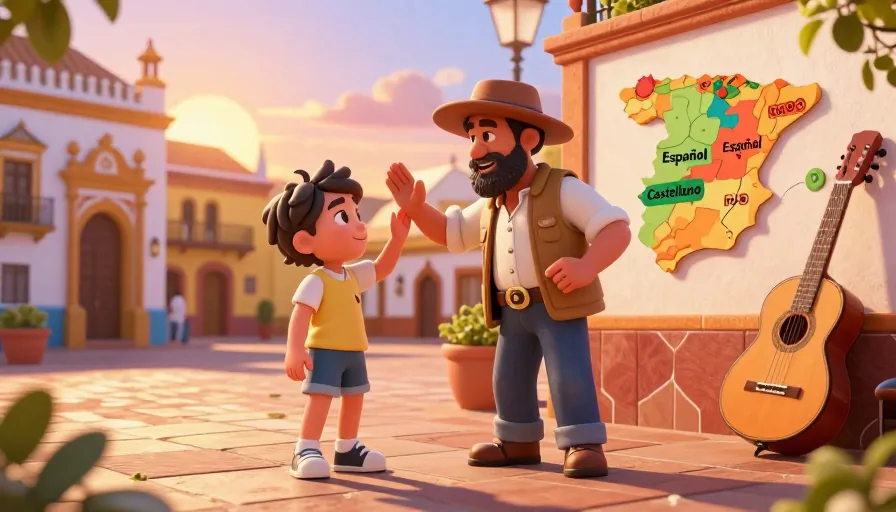
Learning how to say 'Spanish' in Spanish is a fundamental step in mastering the language. The term you're looking for is 'Español'. This guide will walk you through the nuances of this term, its cultural significance, and how to pronounce it correctly.
Understanding the Term 'Español'
The word 'Español' is derived from the Latin word 'Hispanus,' which refers to the Iberian Peninsula. Over time, this term evolved to represent the language spoken in Spain and later in the Americas. Understanding this term is crucial for anyone learning Spanish, as it is the most commonly used word to describe the language.
Mini Drill: Practice with Context
Try to use 'Español' in different sentences to get a feel for its usage:
- ¿Hablas español? (Do you speak Spanish?)
- El español es mi segundo idioma. (Spanish is my second language.)
- Me encanta aprender español. (I love learning Spanish.)
Español vs. Castellano: What's the Difference?
While 'Español' is the widely accepted term for the language, you might encounter 'Castellano.' This term specifically refers to the dialect spoken in the Castile region of Spain. The confusion arises because 'Castellano' is sometimes used interchangeably with 'Español,' but it is more accurate to reserve 'Castellano' for the specific dialect.
Checklist: When to Use 'Castellano'
- Use 'Castellano' when referring to the dialect spoken in the Castile region.
- Use 'Español' when referring to the language in general.
- Avoid using 'Castellano' to describe the language spoken in Latin America.
Cultural Significance of the Spanish Language
Spanish is one of the most widely spoken languages in the world, with over 460 million native speakers. It is the official language in 21 countries and is spoken in many others. The cultural significance of Spanish is immense, as it has influenced literature, music, and art across the globe.
Cultural Context Examples
- Literature: Works by authors like Miguel de Cervantes and Gabriel García Márquez have had a profound impact on world literature.
- Music: Genres like flamenco, salsa, and reggaeton have roots in Spanish-speaking cultures.
- Art: Artists like Pablo Picasso and Frida Kahlo have made significant contributions to the art world.

Aprendé Idiomas con YouTube
Mirá videos en tu idioma objetivo, capturá palabras nuevas como flashcards automáticamente, y seguí tu progreso — todo en un solo lugar.
Ver Cómo Funciona →Pronunciation Guide: How to Say 'Español' Correctly
Pronouncing 'Español' correctly is essential for clear communication. Here’s a step-by-step guide:
- E: Pronounced like the 'e' in 'bed'.
- s: Pronounced like the 's' in 'sun'.
- pa: Pronounced like the 'pa' in 'father'.
- ñ: Pronounced like the 'ny' in 'canyon'.
- o: Pronounced like the 'o' in 'go'.
- l: Pronounced like the 'l' in 'light'.
Interactive Pronunciation Guide
Listen to the audio examples below to perfect your pronunciation:
Comparison with Other Romance Languages
Spanish is part of the Romance language family, which includes languages like French, Italian, and Portuguese. Understanding the differences and similarities between these languages can enhance your learning experience.
Key Differences
- French: Uses nasal vowels and has a more complex grammar structure.
- Italian: Has a more phonetic spelling system and a simpler grammar structure.
- Portuguese: Has a unique pronunciation system and a different set of grammatical rules.
Mini Drill: Practice with Other Romance Languages
Try to translate the following sentences into Spanish, French, Italian, and Portuguese:
- I love learning languages. (Yo amo aprender idiomas.)
- The book is on the table. (El libro está en la mesa.)
- She speaks three languages. (Ella habla tres idiomas.)
Common Mistakes to Avoid
- Mistake 1: Using 'Castellano' instead of 'Español' when referring to the language in general.
- Mistake 2: Mispronouncing 'Español' by not correctly enunciating the 'ñ' sound.
- Mistake 3: Assuming that 'Español' and 'Castellano' are interchangeable in all contexts.
Checklist: Avoiding Common Mistakes
- Always use 'Español' when referring to the language in general.
- Practice the pronunciation of 'Español' regularly.
- Understand the context in which 'Castellano' is appropriate.
Conclusion
Learning how to say 'Spanish' in Spanish is just the beginning of your language learning journey. By understanding the cultural significance, pronunciation, and differences between 'Español' and 'Castellano,' you'll be well on your way to mastering the language. Keep practicing and exploring the rich cultural context of Spanish to enhance your learning experience.
Preguntas frecuentes
Is 'Castellano' the same as 'Español'?
While 'Castellano' is sometimes used interchangeably with 'Español,' it is more accurate to reserve 'Castellano' for the specific dialect spoken in the Castile region of Spain. 'Español' is the widely accepted term for the language in general.
Why is it important to know the difference between 'Español' and 'Castellano'?
Understanding the difference helps you use the correct term in the appropriate context. 'Español' is used for the language in general, while 'Castellano' refers to the specific dialect. This knowledge enhances your communication skills and cultural understanding.
How do I pronounce 'Español' correctly?
Pronounce 'Español' as follows: E (like the 'e' in 'bed'), s (like the 's' in 'sun'), pa (like the 'pa' in 'father'), ñ (like the 'ny' in 'canyon'), o (like the 'o' in 'go'), l (like the 'l' in 'light'). Listen to audio examples to perfect your pronunciation.
Frases relacionadas
Empezá con Metheus
Mirá videos en tu idioma objetivo, capturá palabras nuevas como flashcards automáticamente, y seguí tu progreso — todo en un solo lugar.
Comenzar →

