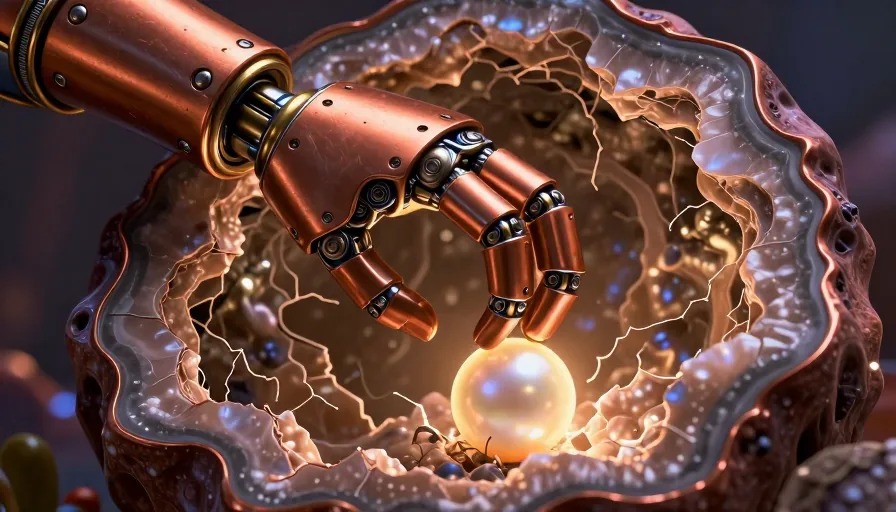
The word 'extraída' is the feminine singular past participle of the Spanish verb 'extraer,' which means 'to extract' or 'to draw out.' This word is commonly used in various contexts, from medical procedures to scientific research. Understanding 'extraída' can significantly enhance your Spanish vocabulary and comprehension skills.
Understanding the Meaning of 'Extraída'
'Extraída' is derived from the verb 'extraer,' which is a transitive verb requiring a direct object. For example, in the sentence 'La información fue extraída del archivo,' 'información' is the direct object being extracted from the 'archivo.'
Grammatical Explanation
'Extraída' is a past participle, which means it is used to form compound tenses with the auxiliary verb 'haber.' For instance, 'La muestra ha sido extraída' translates to 'The sample has been extracted.' It is essential to note that 'extraída' agrees in gender and number with the noun it modifies. For example, 'las muestras extraídas' (the extracted samples) and 'el líquido extraído' (the extracted liquid).
Checklist for Using 'Extraída' Correctly
- Ensure 'extraída' agrees with the noun it modifies in gender and number.
- Use 'extraída' with the auxiliary verb 'haber' to form compound tenses.
- Practice with sentences to understand the context better.
Common Phrases and Examples
- Medical Context: 'La sangre fue extraída para análisis.' (The blood was extracted for analysis.)
- Scientific Research: 'La enzima fue extraída del tejido.' (The enzyme was extracted from the tissue.)
- Everyday Life: 'La miel fue extraída de las colmenas.' (The honey was extracted from the hives.)
- Technology: 'La señal fue extraída del ruido.' (The signal was extracted from the noise.)
- Legal: 'La información fue extraída del archivo.' (The information was extracted from the file.)
Mini Drill: Fill in the Blanks
- La muestra __________ del paciente. (The sample was extracted from the patient.)
- La información __________ del informe. (The information was extracted from the report.)
- La miel __________ de las colmenas. (The honey was extracted from the hives.)
- La enzima __________ del tejido. (The enzyme was extracted from the tissue.)
- La señal __________ del ruido. (The signal was extracted from the noise.)

Aprendé Idiomas con YouTube
Mirá videos en tu idioma objetivo, capturá palabras nuevas como flashcards automáticamente, y seguí tu progreso — todo en un solo lugar.
Ver Cómo Funciona →Pronunciation Guide
To pronounce 'extraída' correctly, follow these steps:
- Phonetic Breakdown: /eks.tɾaˈi.ða/
- Syllable Stress: The stress falls on the third syllable, 'í.'
- Audio Example: Listen to the audio below to hear the correct pronunciation.
[Insert Audio Link Here]
Contextual Usage in Sentences
Understanding 'extraída' in context is crucial for effective communication. Here are some sentences that illustrate its usage:
- Medical: 'La sangre extraída del paciente fue analizada en el laboratorio.' (The blood extracted from the patient was analyzed in the laboratory.)
- Scientific: 'La enzima extraída del tejido fue utilizada en el experimento.' (The enzyme extracted from the tissue was used in the experiment.)
- Everyday Life: 'La miel extraída de las colmenas es de alta calidad.' (The honey extracted from the hives is of high quality.)
- Technology: 'La señal extraída del ruido fue clara y precisa.' (The signal extracted from the noise was clear and precise.)
- Legal: 'La información extraída del archivo fue crucial para el caso.' (The information extracted from the file was crucial for the case.)
Interactive Quiz: Test Your Understanding
- What is the correct translation of 'extraída' in English?
- a) Extracted
- b) Extracted
- c) Extracting
- d) To extract
- Which verb does 'extraída' come from?
- a) Extraer
- b) Extraer
- c) Extraer
- d) Extraer
- In which context would you use 'extraída'?
- a) Medical
- b) Scientific
- c) Everyday Life
- d) All of the above
Comparison with Similar Words and Phrases
- Extraer vs. Sacar: While 'extraer' means 'to extract,' 'sacar' means 'to take out' or 'to remove.' For example, 'Sacar una foto' (to take a photo) vs. 'Extraer información' (to extract information).
- Extraído vs. Extraída: 'Extraído' is the masculine form, while 'extraída' is the feminine form. For example, 'el líquido extraído' (the extracted liquid) vs. 'la muestra extraída' (the extracted sample).
- Extraer vs. Extraído: 'Extraer' is the infinitive form, while 'extraído' is the past participle. For example, 'extraer información' (to extract information) vs. 'información extraída' (extracted information).
Real-Life Examples and Scenarios
- Medical Scenario: A doctor might say, 'La sangre extraída del paciente mostró niveles altos de glucosa.' (The blood extracted from the patient showed high levels of glucose.)
- Scientific Research: A researcher might report, 'La enzima extraída del tejido fue utilizada en el experimento.' (The enzyme extracted from the tissue was used in the experiment.)
- Everyday Life: A beekeeper might explain, 'La miel extraída de las colmenas es de alta calidad.' (The honey extracted from the hives is of high quality.)
- Technology: An engineer might state, 'La señal extraída del ruido fue clara y precisa.' (The signal extracted from the noise was clear and precise.)
- Legal Context: A lawyer might argue, 'La información extraída del archivo fue crucial para el caso.' (The information extracted from the file was crucial for the case.)
Conclusion
Mastering the word 'extraída' and understanding its various contexts can significantly enhance your Spanish language skills. By practicing with examples, quizzes, and real-life scenarios, you can confidently use 'extraída' in your conversations and writings. Keep practicing and exploring new contexts to improve your proficiency.
Preguntas frecuentes
How do I know when to use 'extraída' instead of 'extraído'?
'Extraída' is the feminine form of the past participle, while 'extraído' is the masculine form. Use 'extraída' when the noun it modifies is feminine and 'extraído' when the noun is masculine. For example, 'la muestra extraída' (the extracted sample) vs. 'el líquido extraído' (the extracted liquid).
Can 'extraída' be used in the present tense?
No, 'extraída' is a past participle and cannot be used in the present tense. For present tense, use the verb 'extraer.' For example, 'Estoy extrayendo información' (I am extracting information).
Is 'extraída' always used with 'haber'?
Yes, 'extraída' is typically used with the auxiliary verb 'haber' to form compound tenses. For example, 'La información ha sido extraída' (The information has been extracted).
Frases relacionadas
Empezá con Metheus
Mirá videos en tu idioma objetivo, capturá palabras nuevas como flashcards automáticamente, y seguí tu progreso — todo en un solo lugar.
Comenzar →

