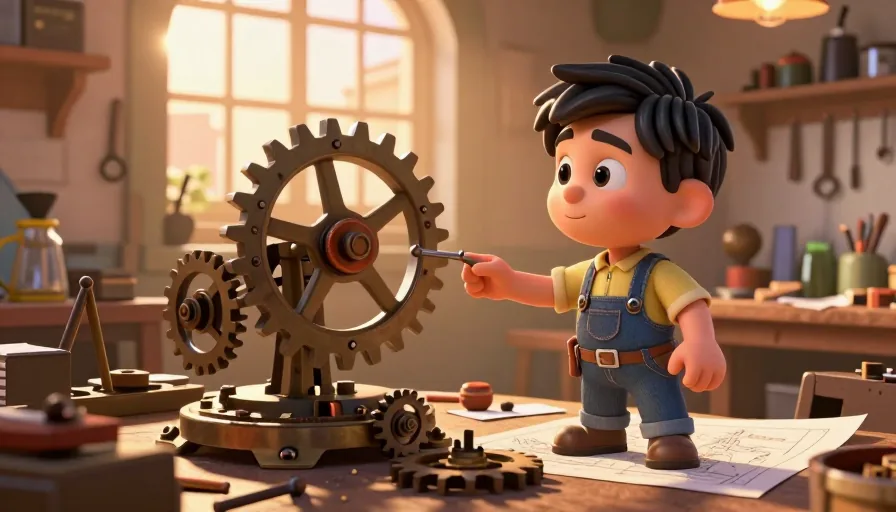
Understanding the gears traduccion is essential for anyone learning Spanish, especially those interested in mechanical and non-mechanical contexts. This guide will provide you with a comprehensive understanding of how to use 'gear' in Spanish, including common phrases, mechanical and non-mechanical uses, pronunciation, and grammar tips.
What is the Meaning of 'Gear' in Spanish?
The word 'gear' in Spanish can be translated as 'engranaje' or 'marcha,' depending on the context. In mechanical terms, 'gear' refers to a toothed wheel that meshes with another toothed wheel to transmit motion or change speed or direction. In non-mechanical contexts, 'gear' can refer to equipment or clothing.
Examples in Different Contexts
- Mechanical Context: 'El engranaje del reloj se rompió.' (The gear of the clock broke.)
- Non-Mechanical Context: 'Necesito comprar nuevo equipo de camping.' (I need to buy new camping gear.)
Common Phrases and Expressions with 'Gear'
Here are some common phrases and expressions using 'gear' in Spanish:
- Cambiar de marcha: To change gear (in a car).
- Poner en marcha: To put into gear or to start.
- Marcha atrás: Reverse gear.
- Marcha adelante: Forward gear.
- Equipado con: Equipped with.
Mini Drill: Fill in the Blanks
Complete the following sentences with the correct form of 'gear' in Spanish:
- El coche necesita _______ nuevas para funcionar correctamente.
- El reloj se _______ cuando se cayó al suelo.
- Necesito _______ nuevo para mi bicicleta.
- El tren está en _______.
- El equipo de fútbol está _______ con ropa nueva.
Gear in Mechanical Contexts
In mechanical contexts, 'gear' is often used to describe parts of machines or vehicles. Here are some examples:
- Engranaje: Gear (as in a toothed wheel).
- Marcha: Gear (as in a speed or setting).
- Transmisión: Transmission (as in a gearbox).
Practical Examples
- Engranaje: 'El engranaje del motor se rompió y necesitamos reemplazarlo.' (The gear of the engine broke and we need to replace it.)
- Marcha: 'El coche tiene seis marchas.' (The car has six gears.)
- Transmisión: 'La transmisión del coche necesita ser revisada.' (The transmission of the car needs to be checked.)
Gear in Non-Mechanical Contexts
In non-mechanical contexts, 'gear' can refer to equipment or clothing. Here are some examples:
- Equipo: Gear (as in equipment).
- Ropa: Clothing (as in gear).
- Material: Material (as in gear).
Practical Examples
- Equipo: 'El equipo de escalada incluye un casco, arnés y cuerdas.' (The climbing gear includes a helmet, harness, and ropes.)
- Ropa: 'Necesito comprar ropa nueva para el invierno.' (I need to buy new winter gear.)
- Material: 'El material de construcción incluye cemento, arena y grava.' (The construction gear includes cement, sand, and gravel.)

Aprendé Idiomas con YouTube
Mirá videos en tu idioma objetivo, capturá palabras nuevas como flashcards automáticamente, y seguí tu progreso — todo en un solo lugar.
Ver Cómo Funciona →Pronunciation Guide for 'Gear'
The pronunciation of 'gear' in Spanish can vary depending on the context. Here are some guidelines:
- Engranaje: /en.graˈna.xe/
- Marcha: /ˈmar.tʃa/
- Equipo: /eˈki.po/
- Ropa: /ˈro.pa/
- Material: /ma.teˈɾjal/
Audio Pronunciations
Listen to the audio pronunciations below to improve your understanding:
Grammar Tips for Using 'Gear' in Sentences
When using 'gear' in Spanish, it's important to understand the grammatical context. Here are some tips:
- Gender and Number: 'Engranaje' and 'marcha' are masculine nouns, while 'equipo' and 'ropa' can be either masculine or feminine depending on the context.
- Plural Forms: Add an 's' to the end of the word to make it plural (e.g., engranajes, marchas, equipos, ropa).
- Prepositions: Use 'de' to indicate possession or relationship (e.g., el engranaje del motor, la marcha del coche).
Checklist for Correct Usage
- Understand the context (mechanical vs. non-mechanical).
- Choose the correct translation (engranaje, marcha, equipo, ropa, material).
- Use the correct gender and number.
- Use the correct prepositions.
- Practice with real-life examples and exercises.
Interactive Quizzes and Exercises
Test your knowledge with the following quizzes and exercises:
- True or False: 'Engranaje' is always used in non-mechanical contexts.
- Multiple Choice: What is the correct translation for 'gear' in the sentence 'The car has six gears'?
- a) engranajes
- b) marchas
- c) equipos
- d) ropa
- Fill in the Blanks: Complete the sentence with the correct form of 'gear': 'El _______ de la bicicleta necesita ser reparado.'
- Translation: Translate the following sentence into Spanish: 'The climbing gear includes a helmet, harness, and ropes.'
- Grammar Check: Correct the following sentence: 'El equipo de escalada incluye un casco, arnés, y cuerdas.'
Comparison with Similar Words
It's important to compare 'gear' with similar words to avoid confusion. Here are some comparisons:
- Engranaje vs. Marcha: 'Engranaje' refers to a toothed wheel, while 'marcha' refers to a speed or setting.
- Equipo vs. Ropa: 'Equipo' can refer to equipment or team, while 'ropa' specifically refers to clothing.
- Material vs. Equipo: 'Material' refers to raw materials, while 'equipo' refers to equipment or tools.
Practical Examples
- Engranaje vs. Marcha: 'El engranaje del reloj se rompió.' vs. 'El coche tiene seis marchas.'
- Equipo vs. Ropa: 'El equipo de escalada incluye un casco, arnés y cuerdas.' vs. 'Necesito comprar ropa nueva para el invierno.'
- Material vs. Equipo: 'El material de construcción incluye cemento, arena y grava.' vs. 'El equipo de construcción incluye martillos, sierras y clavos.'
Conclusion
Understanding the gears traduccion is crucial for mastering Spanish, especially in technical and everyday contexts. By following this guide, you'll be able to use 'gear' correctly in various situations, improving your language skills and confidence.
Preguntas frecuentes
What is the difference between 'engranaje' and 'marcha'?
'Engranaje' refers to a toothed wheel used in mechanical contexts, while 'marcha' refers to a speed or setting, often used in the context of vehicles.
Can 'equipo' be used to refer to clothing?
Yes, 'equipo' can be used to refer to clothing, especially in the context of sports or outdoor activities. However, 'ropa' is more commonly used to refer to clothing in general.
How do I know when to use 'gear' in Spanish?
The context will determine the correct translation. For mechanical contexts, use 'engranaje' or 'marcha'. For non-mechanical contexts, use 'equipo', 'ropa', or 'material' depending on the specific meaning.
Frases relacionadas
Empezá con Metheus
Mirá videos en tu idioma objetivo, capturá palabras nuevas como flashcards automáticamente, y seguí tu progreso — todo en un solo lugar.
Comenzar →

