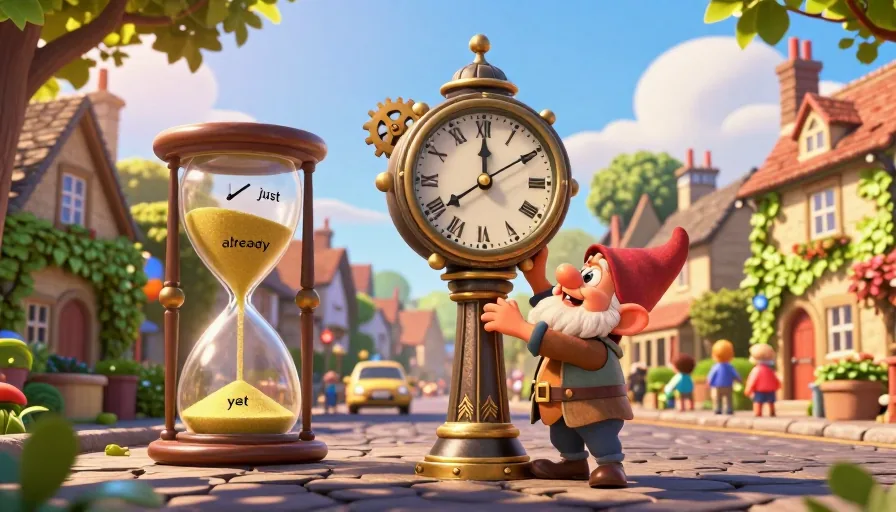
just already yet: guía práctica y clara para dominar este tema en contexto real.
Mastering 'Just', 'Already', and 'Yet' with Present Perfect Tense
Understanding how to use 'just', 'already', and 'yet' with the present perfect tense is crucial for expressing time-related aspects of events or experiences in English. These words help to convey the timing of an action in relation to the present moment. In this guide, we will explore the meanings of 'just', 'already', and 'yet', provide practical examples, and offer interactive exercises to help you master these concepts.
Understanding 'Just', 'Already', and 'Yet' with Present Perfect
'Just'
The word 'just' is used to indicate that an action was completed a short time ago. It emphasizes the recentness of the action.
Example:
I have just finished my homework.
This sentence means that the speaker completed their homework very recently.
'Already'
The word 'already' is used to indicate that an action was completed before the expected time or before now. It often conveys a sense of surprise or accomplishment.
Example:
She has already read that book.
This sentence implies that the book was read earlier than expected.
'Yet'
The word 'yet' is used in negative sentences or questions to indicate that an action has not been completed up to the present moment. It suggests that the action is expected to happen in the future.
Example:
He hasn't called yet.
This sentence means that the speaker is still waiting for the call.
Practical Examples and Exercises
Exercise 1: Fill in the Blanks
Complete the following sentences with 'just', 'already', or 'yet'.
-
I haven't eaten breakfast
-
She has
-
They have
-
We haven't decided
-
He has
Exercise 2: Sentence Correction
Correct the following sentences by adding 'just', 'already', or 'yet'.
-
I finished my work.
-
She read the report.
-
They didn't arrive.
-
We decided to go.
-
He called me.

Aprendé Idiomas con YouTube
Mirá videos en tu idioma objetivo, capturá palabras nuevas como flashcards automáticamente, y seguí tu progreso — todo en un solo lugar.
Ver Cómo Funciona →Common Mistakes and How to Avoid Them
Mistake 1: Confusing 'Just' and 'Already'
Incorrect: I have already finished my homework just now.
Correct: I have just finished my homework.
Mistake 2: Using 'Yet' in Positive Sentences
Incorrect: I have called him yet.
Correct: I haven't called him yet.
Mistake 3: Overusing 'Just'
Incorrect: I have just eaten lunch, and I have just finished my work.
Correct: I have just eaten lunch, and I finished my work a while ago.
Interactive Quizzes and Games
Quiz 1: True or False
-
'Just' can be used to indicate a future action.
-
'Already' is often used in negative sentences.
-
'Yet' can be used in positive sentences.
-
'Just' emphasizes the recentness of an action.
-
'Already' is used to indicate that an action was completed before the expected time.
Game: Sentence Builder
Create sentences using 'just', 'already', and 'yet' with the present perfect tense. Use the following words:
- finish
- read
- call
- decide
- eat
Example:
I have just finished my homework.
Checklist for Mastery
- Understand the difference between 'just', 'already', and 'yet'.
- Practice using these words in sentences.
- Complete exercises and quizzes to reinforce learning.
- Avoid common mistakes by reviewing examples.
- Engage in interactive games to make learning fun.
By following this checklist, you will be well on your way to mastering 'just', 'already', and 'yet' with the present perfect tense.
Mini Drills for Quick Practice
Drill 1: Quick Fill-In
Complete the following sentences with the correct word:
-
I haven't seen him
-
She has
-
They have
-
We haven't left
-
He has
Drill 2: Sentence Transformation
Transform the following sentences using 'just', 'already', or 'yet':
-
I finished my work.
-
She read the book.
-
They didn't arrive.
-
We decided to go.
-
He called me.
By practicing these drills, you will become more comfortable using 'just', 'already', and 'yet' in your English conversations.
Conclusion
Mastering 'just', 'already', and 'yet' with the present perfect tense is essential for expressing time-related aspects of events or experiences accurately. Through practical examples, exercises, and interactive quizzes, you can improve your grammar skills and communicate more effectively in English. Keep practicing, and soon you will be using these words with confidence.
Preguntas frecuentes
Can 'just' be used with past tense?
No, 'just' is typically used with the present perfect tense to indicate that an action was completed a short time ago. For example, 'I have just finished my homework.'
Is 'already' used in negative sentences?
No, 'already' is not typically used in negative sentences. It is used to indicate that an action was completed before the expected time. For example, 'She has already read that book.'
Can 'yet' be used in positive sentences?
No, 'yet' is used in negative sentences or questions to indicate that an action has not been completed up to the present moment. For example, 'He hasn't called yet.'
Frases relacionadas
Empezá con Metheus
Mirá videos en tu idioma objetivo, capturá palabras nuevas como flashcards automáticamente, y seguí tu progreso — todo en un solo lugar.
Comenzar →

